
Back in February, we had the first session of our Introduction to Permaculture, with Klaudia van Gool. A dozen or so of us met at Helston Scout Hut and took a few minutes to introduce ourselves and share what we already knew about growing and permaculture. I thought I already knew a little about the subject, but as the day progressed I realised that I had barely scratched the surface.
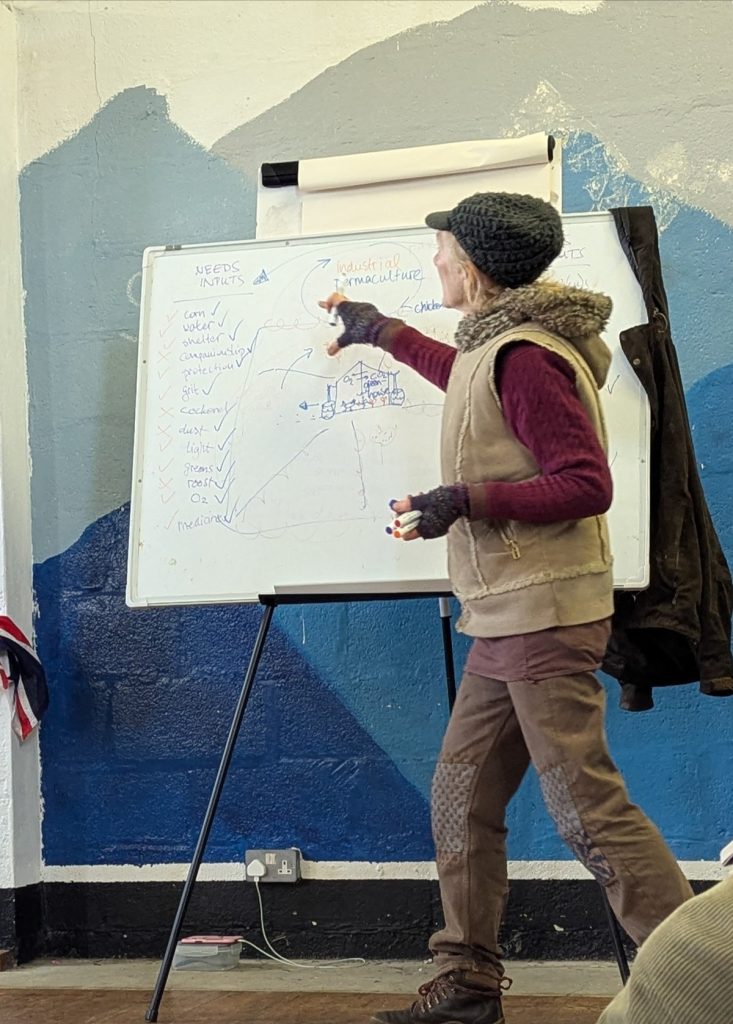
Origins and Principles
We started with a brief introduction to how permaculture came about through studying forest systems and why they work so well. Forests are wonderfully diverse, support multiple species, generate no waste, and provide an abundant yield without being “farmed” in the traditional sense.
Bill Mollison and David Holmgren realised there were several principles involved in modelling forest systems that could potentially be applied to our use of the land. However, in applying this systems thinking, they realised that a set of ethics was also vital. The three core ethics they came up with are:
- Earth Care
- People Care
- Fair Share
Over years of study and application, it has become apparent that permaculture thinking can also be applied to other aspects of our lives, such as finance and governance.
As Robyn Francis, one of the pioneers of permaculture, said:
“Permaculture addresses all aspects of human culture, not only food production, but how we build, how we organise ourselves and how we utilise all our resources including the human resource.”
The Interdependence of Systems
The day featured a mixture of activities so we weren’t just sitting in front of a whiteboard facing “death by PowerPoint”.
One exercise had us standing in a circle, where we took on the persona of various flora and fauna. Using a large ball of twine, we started connecting one person to the next by considering interdependencies. For example, an owl is dependent on a tree for shelter, a tree is dependent on water for photosynthesis, water is dependent on reeds to clean it, and so on.
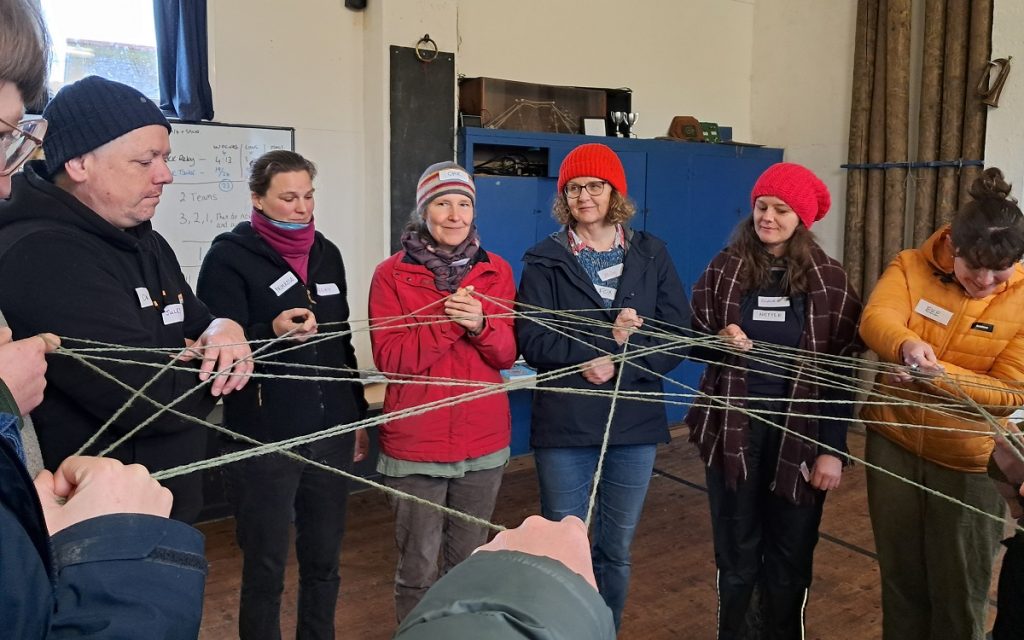
Before long, we had a deeply interconnected web. At this point, Klaudia asked Melissa, representing an oak tree, to let go of her twine. There was a palpable sadness in the group as the entire web sagged and verged of collapse. It was a highly effective illustration of the interdependence in nature.
Observing the Land
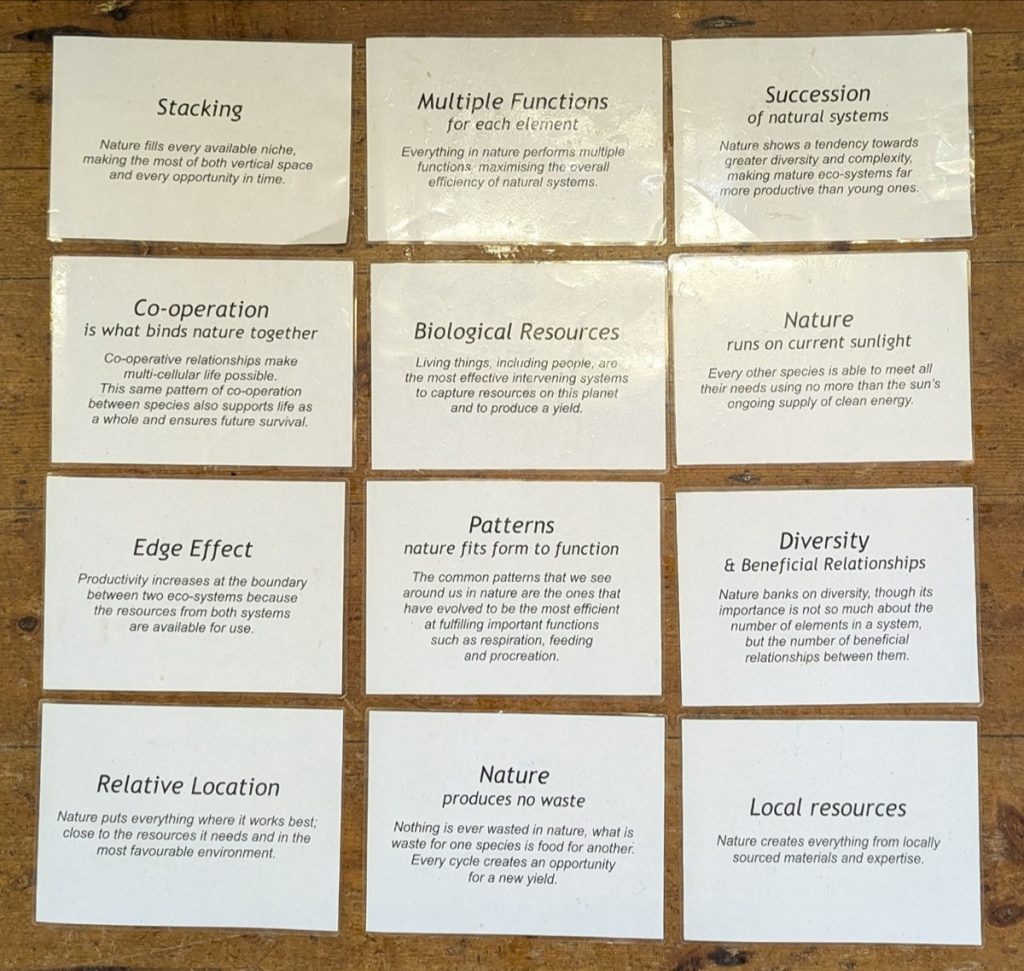
Later, we visited the Downs Land site to look at permaculture principles in situ. We all had cards regarding various observable patterns in nature: mine was regarding the succession of natural systems. It really helped seeing the principles embodied in the nature around us.
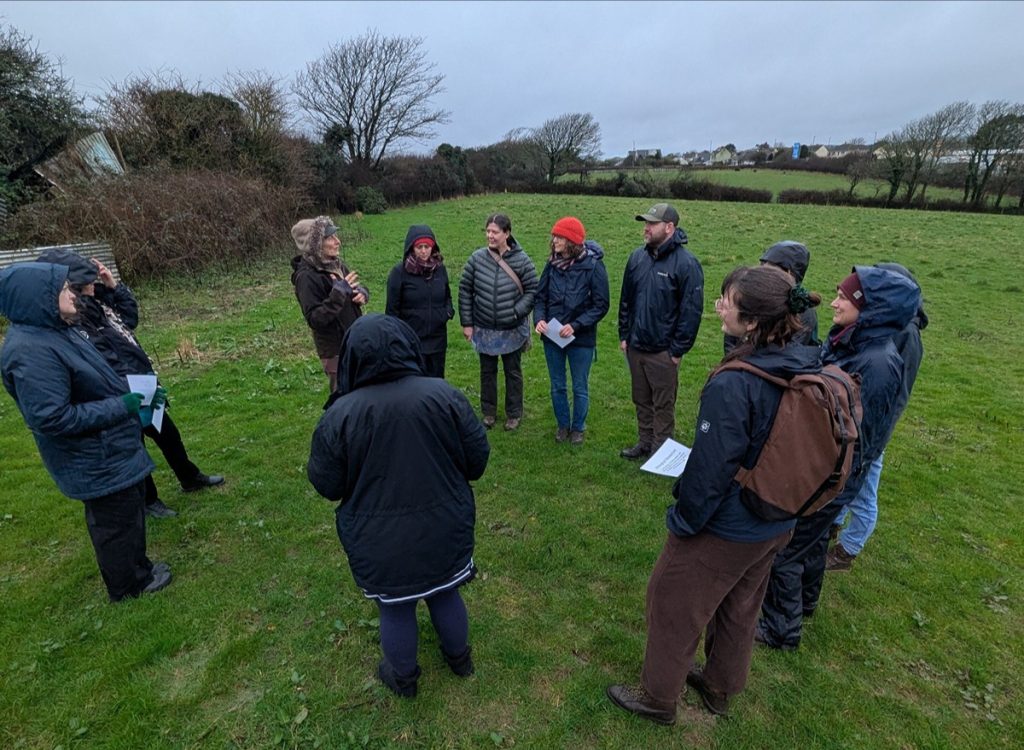
It was a very wet day!
Industrial vs. Permaculture Systems
Heading back to the Scout hut, we compared industrial systems to permaculture systems. Industrial systems tend to bring in inputs from far and wide, whereas permaculture uses inputs from nearby or outputs from adjacent systems.
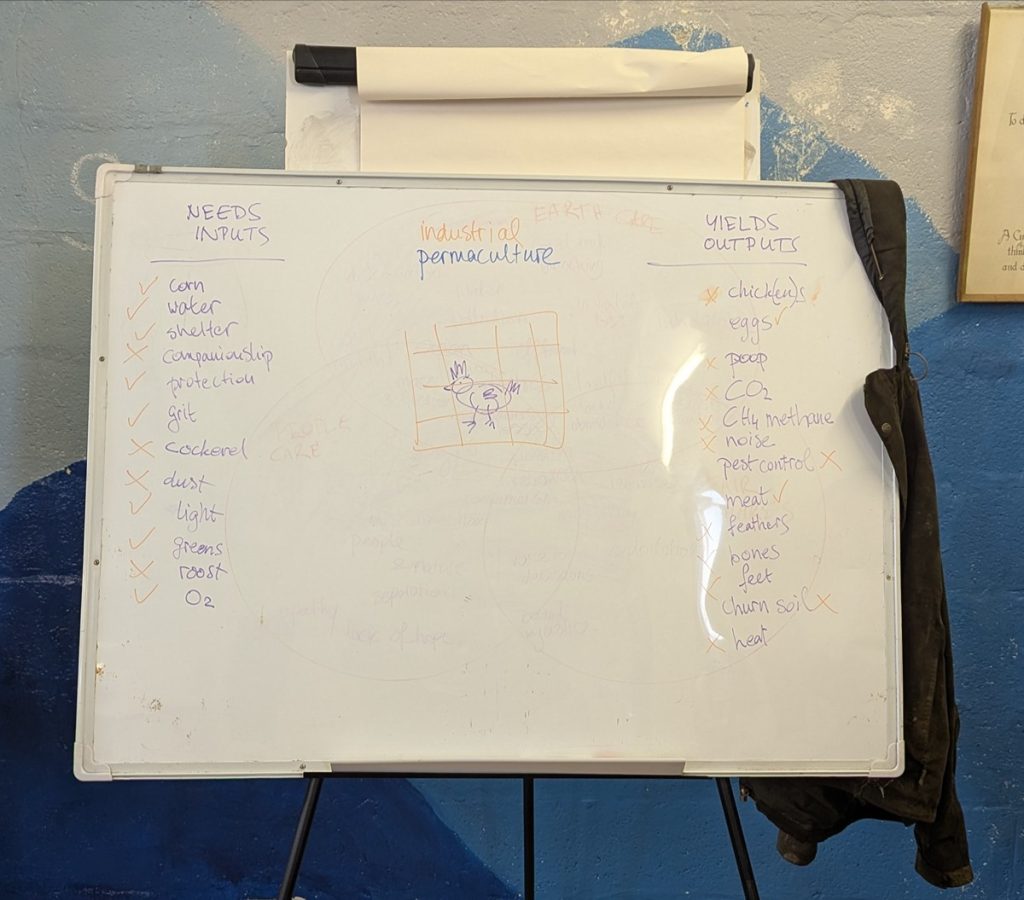
Outputs in industrial systems are often viewed as ‘waste’, something to get rid of (and usually creating additional costs). In permaculture, outputs from one activity are used as inputs to another, where possible.
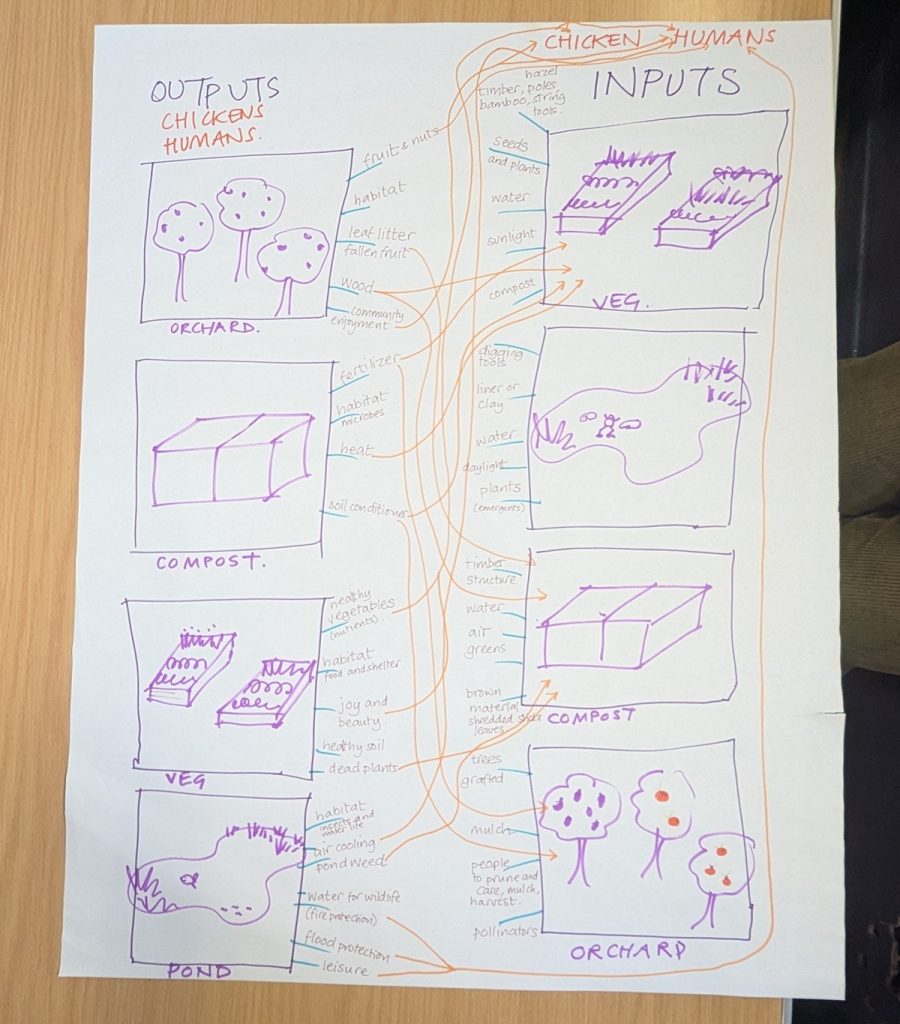
We looked at the inputs and outputs of various features, like orchards, compost, vegetable beds, or ponds, and how the outputs from one might link up to the inputs of another. There were so many connections; the potential for minimising external inputs is really only limited by observation, thought, and imagination.
Inspiration From Nature
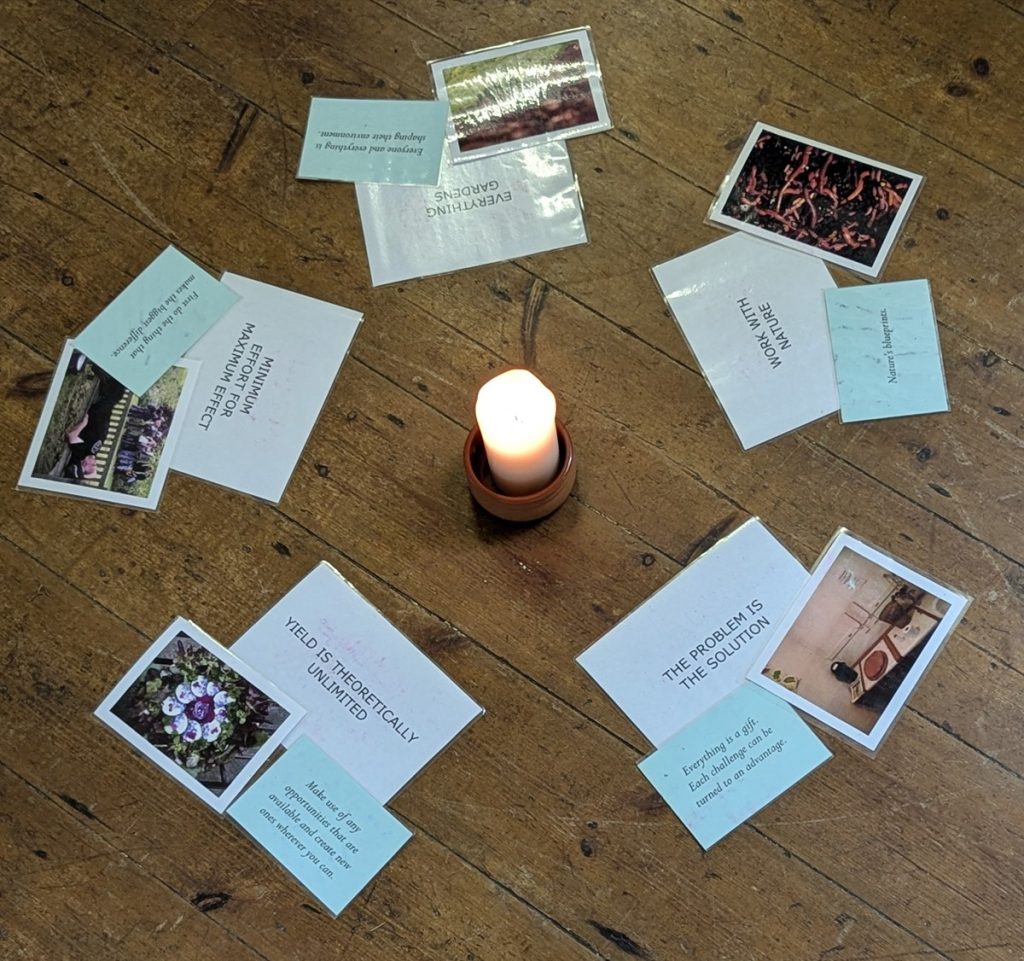
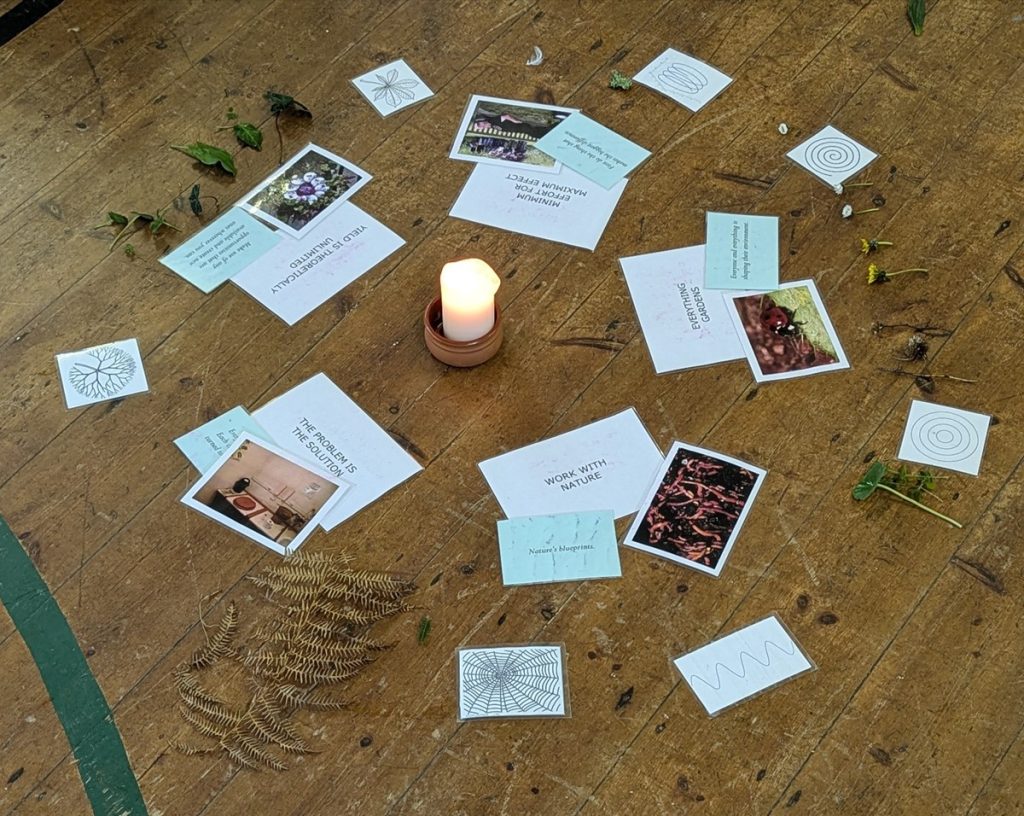
We also looked at a number of permaculture aphorisms that guide thought, such as “The problem is the solution” or “Everything gardens.”
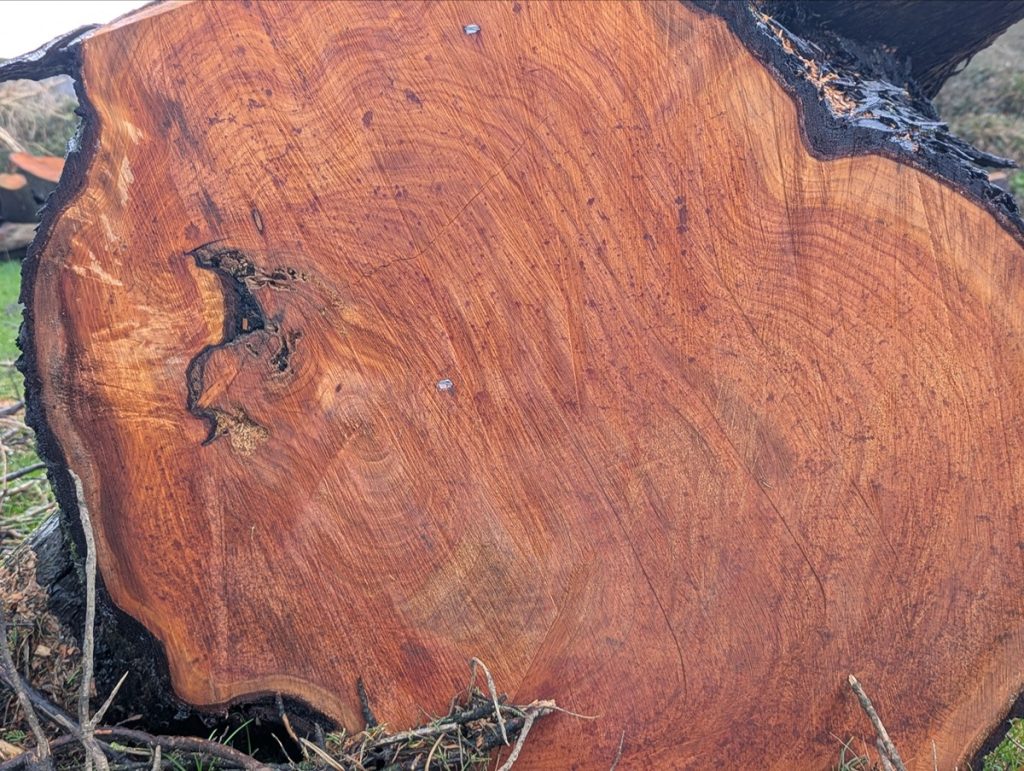
Finally, we looked at repeating patterns in nature (such as circles, spirals, branching, and helices) and went outside to find examples in the park around the centre. Mine was too big to bring inside!
These patterns can often serve as inspiration to create designs that draw from nature’s effectiveness. A great example is the herb spiral that you will see in a lot of permaculture gardens, which creates multiple microclimates suiting different plants.
Conclusion
All in all, it was a really stimulating and exhausting day; it’s hard to do it justice in a few photos, there was such a lot of content. And this was only halfway through the introduction! I am very much looking forward to part two, after a little rest to absorb everything.
Further Reading
Permaculture: A Designers’ Manual(Bill Mollison): The comprehensive “bible” of permaculture, covering the full spectrum of principles.
Permaculture: Principles & Pathways Beyond Sustainability(David Holmgren): Defines the 12 core design principles.
The One-Straw Revolution (Masanobu Fukuoka): A fundamental philosophical text on natural farming.
The Earth Care Manual(Patrick Whitefield): A practical guide tailored for Britain and temperate climates.
People & Permaculture(Looby Macnamara): Focuses on the “people care” aspect, including personal and social design.