
Developing my relationship with this land.
#0
The invitation to attend the Permaculture course came at a really interesting time for me. I’d become more settled here in Helston, and had found my own space and communities. New ideas were popping up, and I was reading around subjects to do with the land (soil health, regenerative agriculture) but I wasn’t sure in which direction to go next. I’d just finished a succession of shows (my first performances for a long time) and I was enjoying the space and time I now had after months of rehearsals, but equally wanting to connect again, in a small way, with the community and be involved in something. This seemed like the perfect opportunity.
I wasn’t born here in Cornwall, nor do my family claim any Cornish heritage, but I chose to make Cornwall my home over 5 years ago. My maternal grandparents lived not far from Helston for a while and loved Flora Day, so I like to think their path led to mine here (although I was unaware that they had ever been to Flora Day until I had attended for at least 2 years.). Perhaps they planted intentions in this land which I have come to realise.
I’d had this desire to live in Cornwall for at least 15 years. What was the thread that kept this desire alive that long? Was it the Rosamund Pilcher novels I used to read, or the longing to return to my innocence, as child on holiday? Was it the memories of happy days at the beach on a summer’s day? I don’t know. It could have been all these things, or none, something different. Anyway, I came.
#1
It was, I think, my first year here when there was a development proposed including The Range. A McDonald’s. A rage in me jumped to object. Oh, HELL no. I submitted my objection, along with lots of others. The development did not get approved. Separately, I saw a play (White Horse, put on by o-region, based on Michael Morpurgo’s book, The White Horse at Zennor) at the Regal Theatre in Redruth. The refrain was something like: Give to the land and the land will give to you. I already had a growing interest in regenerative farming, having watched a few documentaries and read some books about it. I was also experimenting with food approaches, I’d had gut problems for years and I ate too much sugar. Then I received an email – the decisions were being made about how best to use the land that would now not be developed. I took the survey, and contributed my views. I could at least do that.
Give to the land and the land will give to you.
I knew this part of the world, because we visited Cornwall on holiday; often staying on the Lizard Peninsula. My childish feet ran on the beaches at Kynance and Kennack, I screamed on the rides at Flambards, we used to look for the ‘curly wire’, which used to grace the boundary of RNAS Culdrose; our own ‘nearly there’ sign. So, whilst I was not born here, my heart grew here and I learned to open up again here. When I ‘lost’ my hometown – the connection to it, and love of it – just a little further up the coast, not through war, or pestilence, or other reasons why people get displaced, but through trauma, I came to the place I felt free. A place which, broadly, thankfully, remains unchanged. If I can, in any small way, help keep the land in its most giving, most sustainable state, I will. Here is my heart, so here are my hands. Here are my words to help you know me and how I feel and why I do.
#2
I’m curious that all of us from the course come from varied backgrounds with different experiences and knowledge. I am so enjoying the fact that we are, in several ways, quite a diverse group. We are able to bring a plethora of talents, insights and considerations. Identifying, confirming, organising. Taking photos. I am an ‘ideas’ person, plus a connector, particularly in times like these, when I have no formal responsibility (except as a participant/contributor), nor required to lead. What a privilege to be part of such a group and come together to do this! It feels like most of us are easy with each other, and most, if not all of us are sensitive – qualities, I think which are needed for the practice of permaculture and the understanding of the land.
It is going to site that helps ease those conversations. We walk and talk and then ‘land’ on the land. It’s filled with so much potential, but also enough: plenty, just as it is. We share our sense of how it feels; this is part of the course and also, our natural response to a place that carries an energy, which awakens something in us, as we work out how we interact with it, what strikes us, what we see and feel, what we notice.
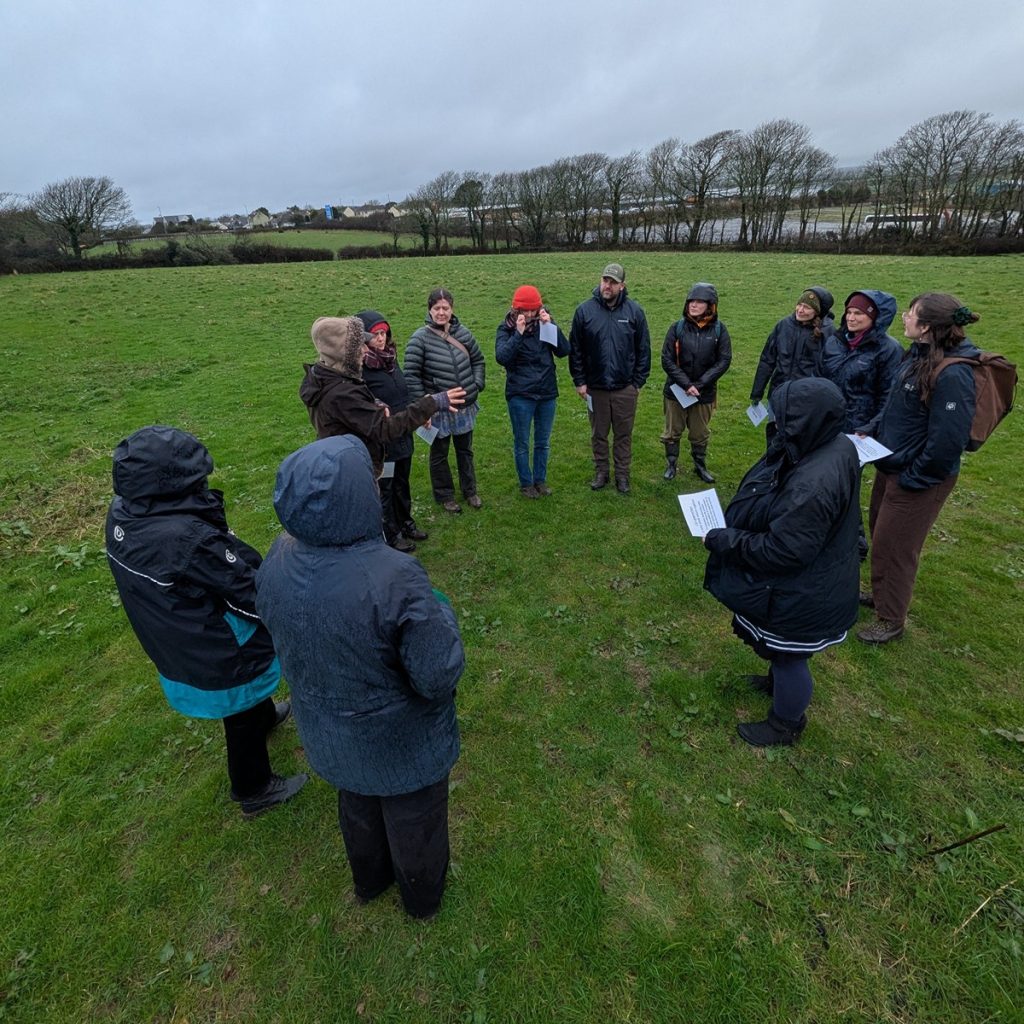
Reflecting on how I got here feels like the I’m seeing the magic of the land weaving itself between us. I had written and submitted my objection to the original development that was supposed to be here, on this small area, because I saw a flyer in Mrs K’s veg shop and picked it up. Taking it home and making the decision to navigate the Cornwall Council planning portal was something I was determined to do – to stand up for a part of the county that had given me so much; I never dreamed it would turn into this. One tiny little act – picking up that leaflet – then one tiny decision has opened doors, helped me make new connections, filled me with new experiences and useful, tangible knowledge; one small decision led to so much.
#3
It’s Day 3 of the course, so I can thankfully remember everyone’s names (I mean, remembering everyone’s names by the end of the day; we’re still recapping names at the beginning of every session!). I had convinced myself that Pete was called Ben, but somehow, I also knew that that was wrong! I will get there.
I was a bit more excitable this time, eagerly recounting to anyone who would listen, the refusal of the McDonald’s application for a 24/7 licence (on its new site, a little further out of town) and the commencement of my bokashiexperiment.
My playful side came out today. Going to site is always an experience that changes me and reminds me why we need land like this. It’s partly because when we’re on site we have to pay attention. Care-‘full’ attention, as any good spouse, parent, friend or lover knows, is eminently helpful and supportive to the relationship. The same applies to nature: the land, the plants, the insects we’re seeing.
Spring had sprung itself on us; even before we had set foot in the first field. I opened my mouth in surprise. The grasses had grown up about a foot, covering much of the field. Ben, I mean, Pete, had confirmed this had happened in the last two weeks. The sun was out (for the first time in our sessions!) so I think everyone felt a bit more alive. We had specific group tasks, and Team Secret Orchid (I make everything competitive!) were having fun.
I still have this rather desperate feeling that the land should be preserved ‘as it is’ and a chance connection with someone this week who was talking about ‘forest bathing’ (and how the more ancient the woodlands are, can be particularly supportive for this practice), went some way towards confirming this. ‘Let’s not concrete over everything, we need this land’, is my instinctive response. Klaudia did remind me of the reality that it would go to bramble if we left it, and of course, it would. But maybe if we maintained it as fields? I sigh as I cannot figure this one out. I also remind myself it’s not my job to figure everything out for the whole world, and perhaps the land is reminding me that it’s ok to let things – people, solutions, ideas – come when they are ready.
Someone else reminds me that if we turn the land into a place which people enjoy, they feel a connection and therefore become protective over it. I still feel overwhelmed by the number of houses in Helston that are already being developed and I’m asking myself if the infrastructure really exists for that number of extra people. I am also a hypocrite as I have moved to Helston myself and live in such an estate. If I’d already been living in Helston years ago, I would have likely been objecting to the development where I now live. The new McDonalds, the additional houses, all of it feels somewhat overwhelming, but I challenge myself that preserving it as it is, still requires maintenance and design and support and groups and planning and (often) cash. Perhaps I’m trying to preserve things as they are, for reasons that are more to do with me than the land itself.
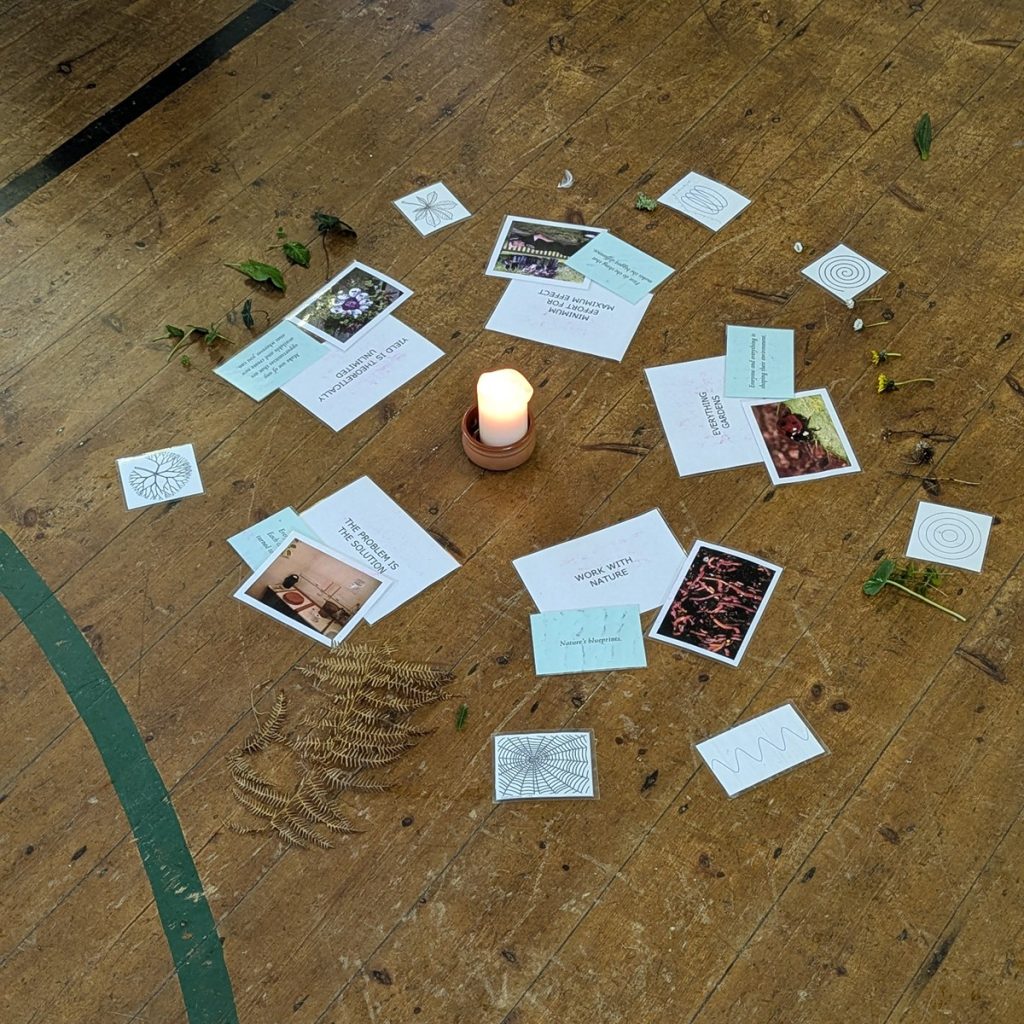
It feels like the land and I have moved into a new stage of relationship, a little more familiarity of sorts. What we do today feels less overwhelming, perhaps because we each had a bit of land to look at, observe and note down. We are collating data. This is factual, tangible, something I can write in a notebook. We are compiling the information and mapping it to our various areas. We are starting, there is movement. It’s fun to be able to contribute, to be part of the process, even in a very small way.
Read Part 2 of Claire’s reflections here…