
Developing my relationship with this land.
#4
The problem is the solution: I was musing on this permaculture principle as my washing line had broken. What could possibly be the solution to a broken washing line? However, I realised that the opportunity opened up possibility. The washing line could be re-sited, not only to give me more ‘line’ to hang things on, but also to utilise the covered area I have in the garden when it’s raining. I grew up thinking a rush to judgement and decision was important; these days the practice of curiosity and practicing creativity better serve me.
#5
I’m mid-cycle so I’m feeling cheerful, ready and energetic today. I have opinions, I share them. For some reason, my handwriting isn’t very clear, so I have to explain the things I’ve written on the mind map sheets.
It’s warm today: hot, even. Seeing the land in all its seasons is such an important part of the process. I suddenly link this idea to relationships; those who get married through arrangement don’t have the opportunity to see each other in all seasons, moods or scenarios. Is that helpful? The thought needs more, well, thought.
The grass is even taller and it strikes me that there is a lack of shade. Suddenly, as Katharine mentions, the trees that provide shade have become very important. I think about this as I drive west a couple of days later; grateful for the tree-lined roads and surrounding woodlands that crop up along the way. Their shading relieves the relentless heat and stops the sun burning my arm on the steering wheel.
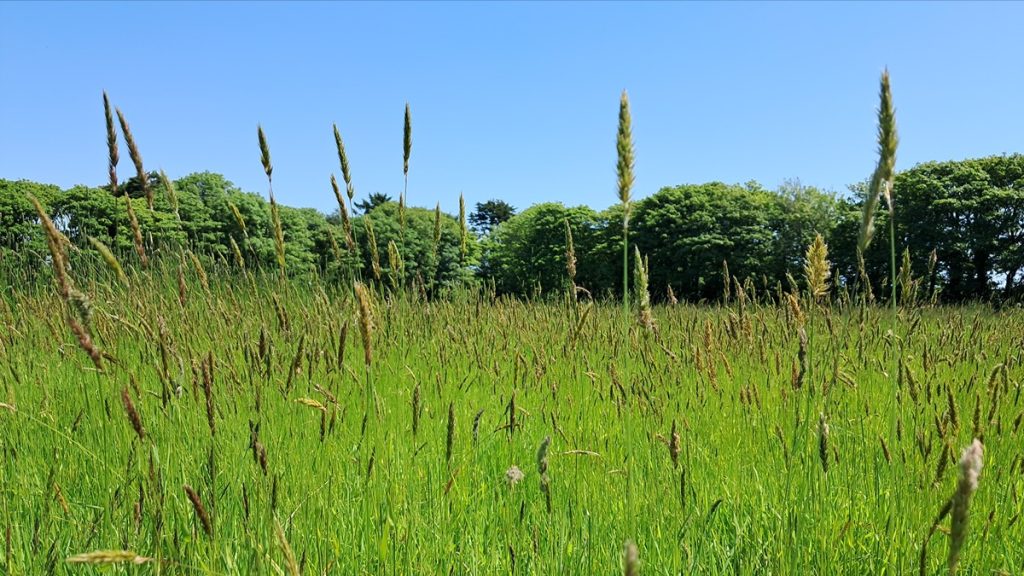
The peace and protectiveness of the third field also strikes me again today. The field is surrounded by tall trees, which screen off the outside world. It is more private and peaceful. It needs a special purpose.
I think back over the last few months. What has changed for me? I’ve evolved on my food journey, I’ve started my bokashi composting system, my tomato plant has grown. All of these are connected to the land and how it provides. I’ve also done (or rather not done!) a bit of ‘no mow May’ and intend to leave a patch of my lawn to grow all year round. I have also planted some wildflower seeds in this patch although I need to wait a little to see if my seed sowing has been successful.
There is a tangible quality to the project now. We’re starting to define and shape what the land might be used for, and are sharing ideas, mixing these in with what’s already been discussed in the preceding forums and meetings.
I still feel a sense of urgency about protecting the land, and a sense of hopelessness for the people who remain disconnected, much like the person I once was. I do allow myself to recall that there was once a time when I wasn’t like I am now; we can change.
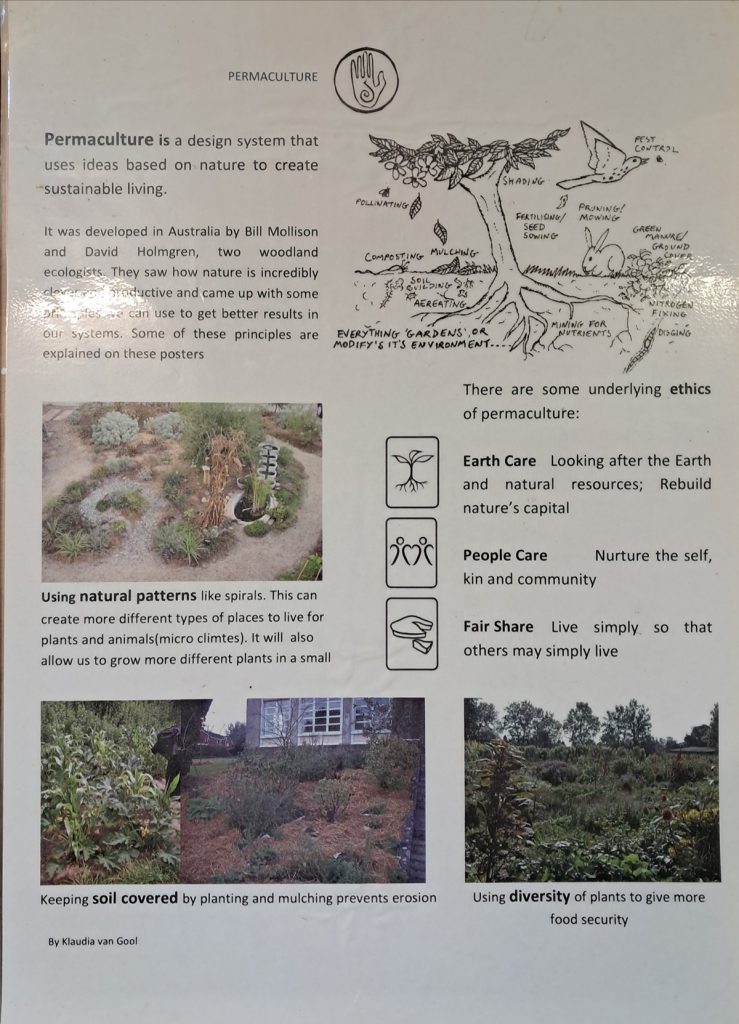
I see how the principles of permaculture I’ve learned about have been finding their way into my life. My home systems have become more efficient, as I’ve practiced and begun to develop the skills of better utilising what I have, reusing where I can and looking at inputs and outputs. I’m building routines that support me better, particularly in my own small piece of land and the structures I am responsible for. My herbs and plants are flourishing for the most part. One of the outputs of the bokashi is the compost ‘tea’, which can be diluted and used to feed plants or keep the drains clear, a lovely example of ‘using all the parts’.
I’m also seeing how I could contribute more, both now and in the future. In past commitments, I’ve worked in contexts of obligation, of ‘all or nothing’, of ‘in or out, in ‘shoulds’. By contrast, this contribution feels more like an overflow, which I want to share, although I don’t know what that looks like yet.
I think of how we stood on the land in February and March, in drizzly rain, feeling the wind and now the hot sun. It reveals different things with different seasons, again, much like us humans.
#6
The final day of the course; there is an almost spring like joy in the air. It felt celebratory because it’s been ages since we have seen each other (the longest gap between course days) and it felt good to be a group again. As we settled into the room, I felt a sense of overwhelm at the task ahead; today we were hoping to settle on a design for the land. A big undertaking.
By lunchtime, we had only got through the recap, and it was weighing on me. I was also tired and had my period, and, despite years of cyclical awareness, I forget that this means I need do less. Instead, I felt – and held onto – a little strain, pressure to ‘get it done’ and fear that, well, we wouldn’t.
Except, somehow, we did. It felt like from one hour to the next there was almost nothing, and then there was something. Putting our heads together really worked, and from pieces of paper sprung outlines, design, works of art. Truly, a feat, accomplished together.
Things have shifted. The land has already given so much to us. Is it not enough as it is? The question was on my mind as I looked at the design. Maybe less is more. It probably will be. Do we need to listen to the land, take our proposals to the land and see what it wants? I can’t imagine the me of 10 years ago saying this or even thinking it. But we are part of it, and it has its own innate knowledge.
I can already feel myself slipping into old habits and patterns – feeling obliged to ‘hold’ the whole project, panicking about how everything is going to get done. I’m just one person, but it’s not just me here.
Relishing in our success, we sat in circle one more time. I realise, of course, that this is merely the beginning. The next door has appeared, ready to be opened. It feels a little sad to leave that gentle space and caring community, but now, feeling into and seeing what happens next, I was also feeling a hint of excitement. Plans, timings, focus. Discussions about workloads, the language we use. Challenges and potential obstacles. All this is to come. But for now, it has felt like a journey of surmounting, not a mountain, but some gentle rolling hills. For me, personally with the land, and again with another part of the community. The land is an abundant giver.
Missed Part 1 of Claire’s reflections? Read it here…