
Our third Permaculture session was on 12th April 2026. As always, we started with a check-in, then shared gratitude for various qualities of water.
Starting with SADIMET, we focused the day on Survey. This can be both physical (specifically looking at soil), but also social (what do people want?).
I’ve misplaced my photo of the SADIMET process, but here’s a great illustration of the steps involved by Carla Moss at Greening Life:
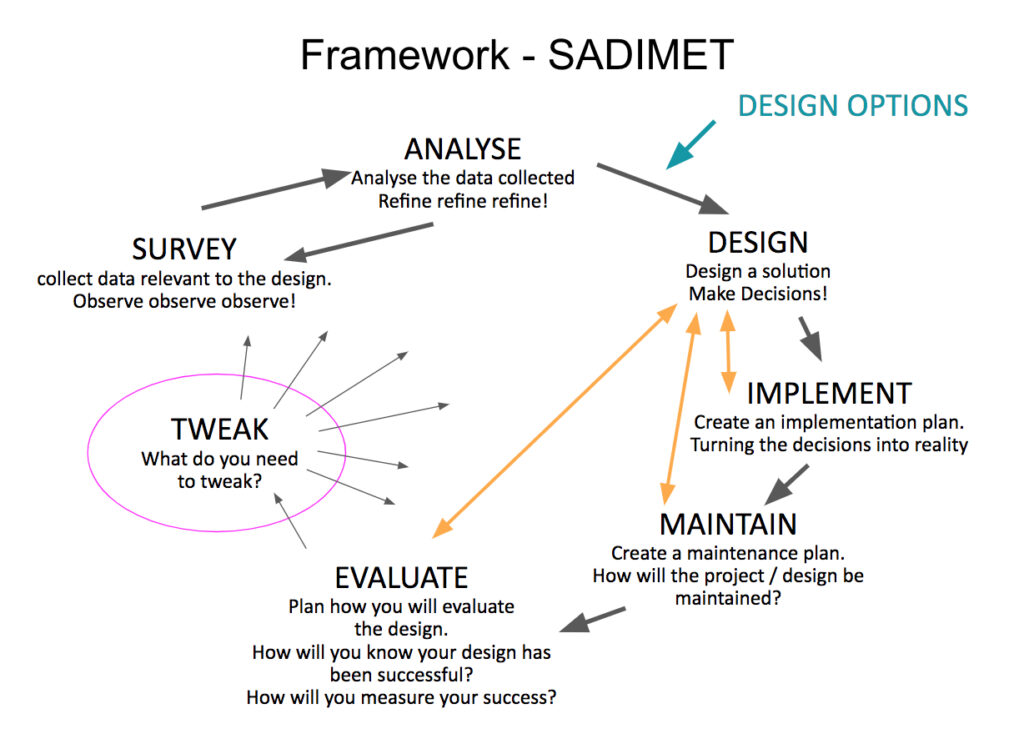
Klaudia stressed the need, during the Survey stage, to stay in ‘observation mode’ and try to stay neutral, rather than imposing our pre-existing ideas on the land.
Soil quality
We then looked at the ‘ingredients’ that make up soil, and their rough proportions: minerals, organic matter, air, and water.
Within the ‘minerals’ section, we can break this down further into:
- gravel
- sand
- silt
- clay
These are essentially the same thing (i.e. inert rock) at various stages of erosion. Some of these minerals can be igneous or sedimentary (or a mixture), which also has an effect on the soil. The various source rocks can also have an impact on the soil’s pH, an important metric:
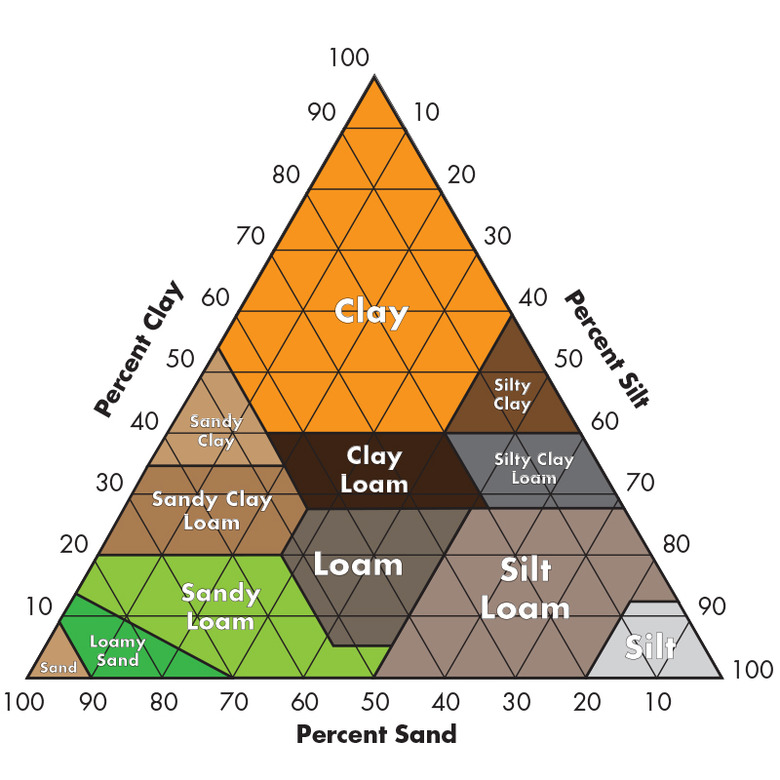
We then went up to the land to fetch a sample of soil from each field, and took then back to the ‘classroom’ for a practical experiment on looking at the make-up of the soil.
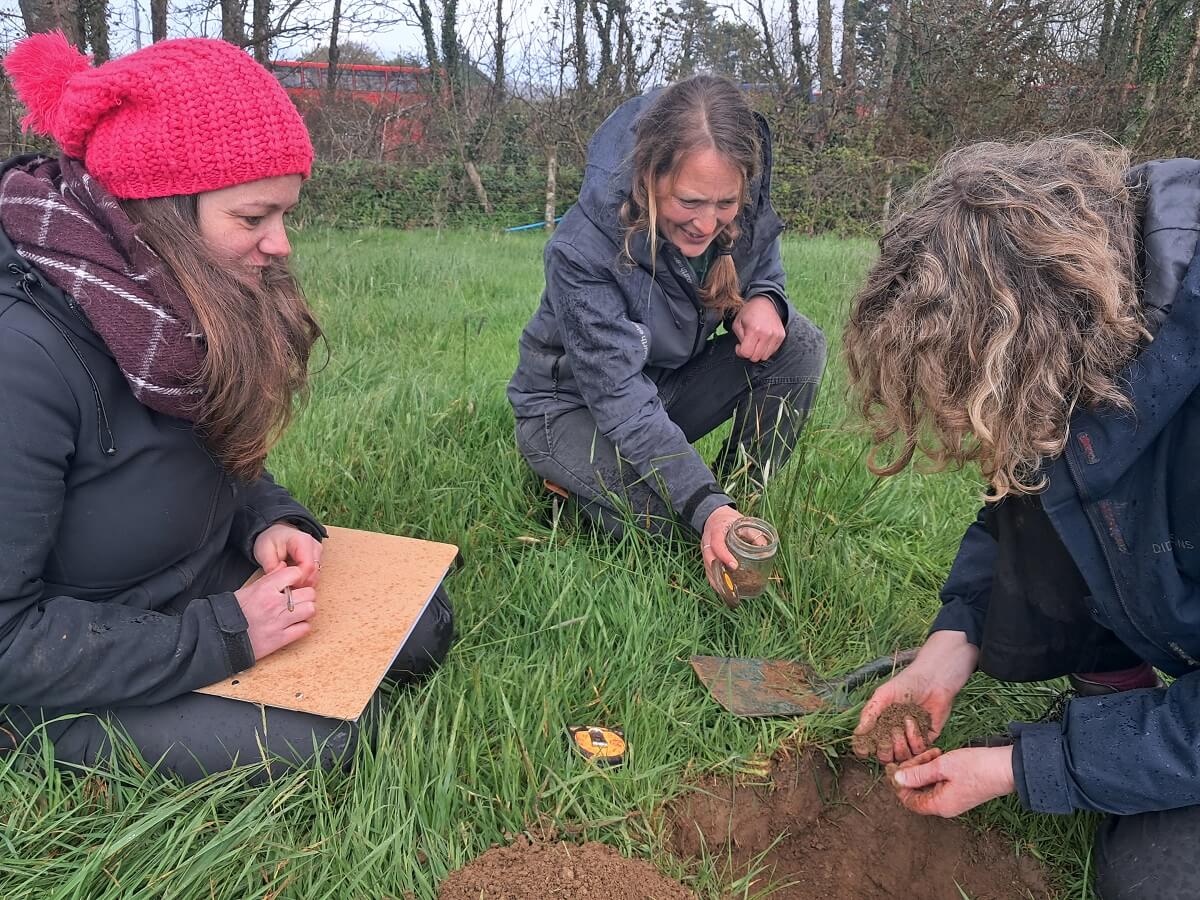
A sample of soil was added to a jar, with the soil taken from below the topsoil, or at the border of topsoil and subsoil, to try and exclude organic matter. We also tried to remove obvious pieces of gravel. We aimed to fill a jam jar (preferably long and thin) past half way. Back at the chapel, we added water up to about 3/4 of the jar, then shook it vigorously to thoroughly mix the soil with the water.
We then set a timer for one minute, at which point a definite line could be seen near the bottom of the jar, where sand had settled. We then set a time for two hours, at which point we could see the settled silt. Over the next two to four days, we would finally see the clay separate from the water. In other words, the largest particles settle first, with the smallest particles (i.e. clay) taking the longest.
In the fictitious example below, there ended up being 8cm of solid matter:
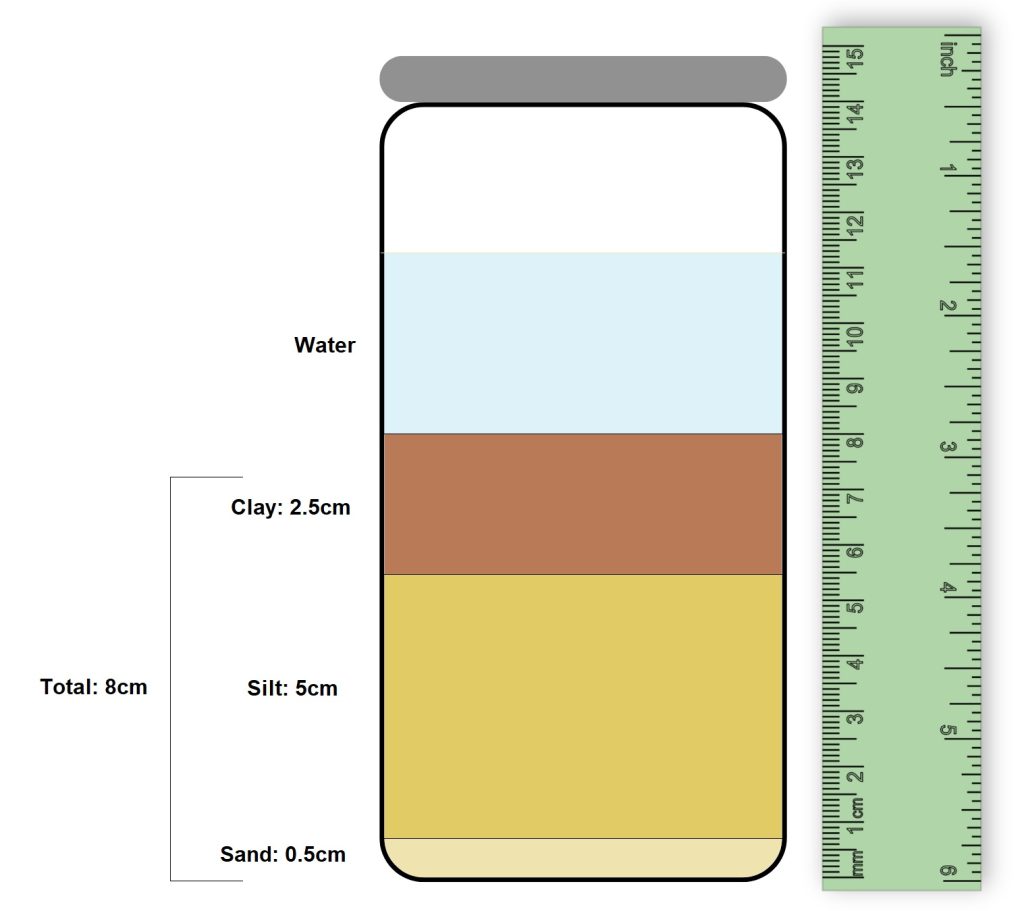
To work out the percentage of, say, silt, we divide the height of the silt by the overall height, and multiply by 100:
5 / 8 x 100 = 62.5%
Using the same formula for all three, we end up with these proportions:
Clay: 31.25%
Silt: 62.5%
Sand: 6.25%
In the chart above, this would put the soil in the Silty Clay Loam category.
PASE Survey
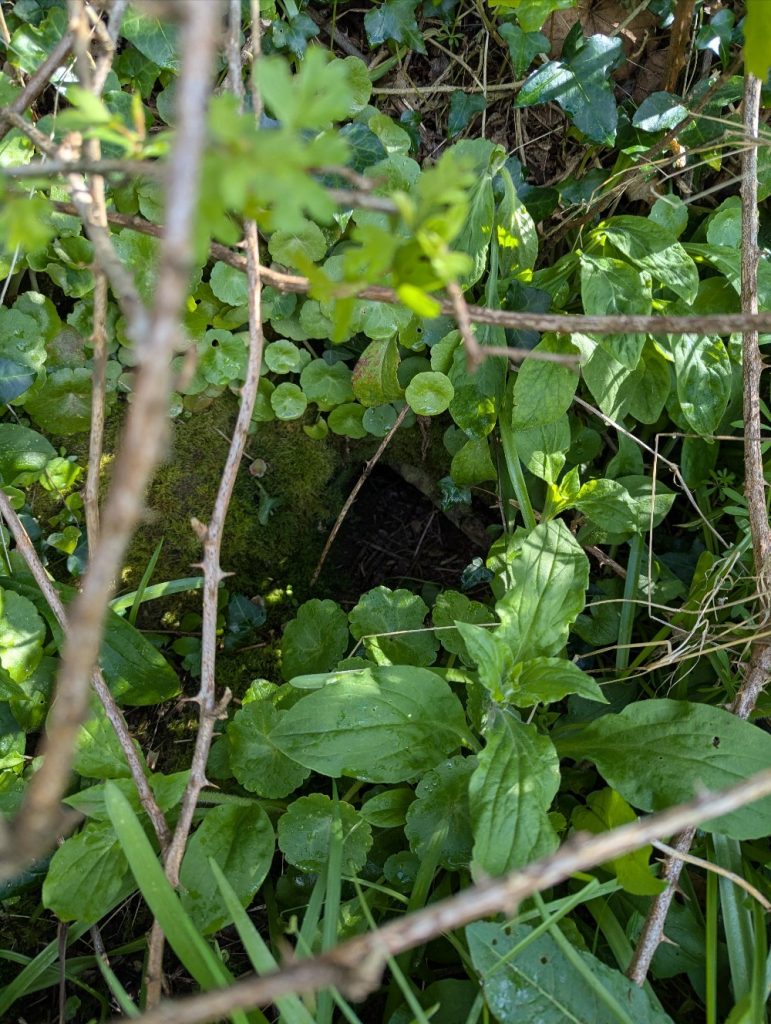
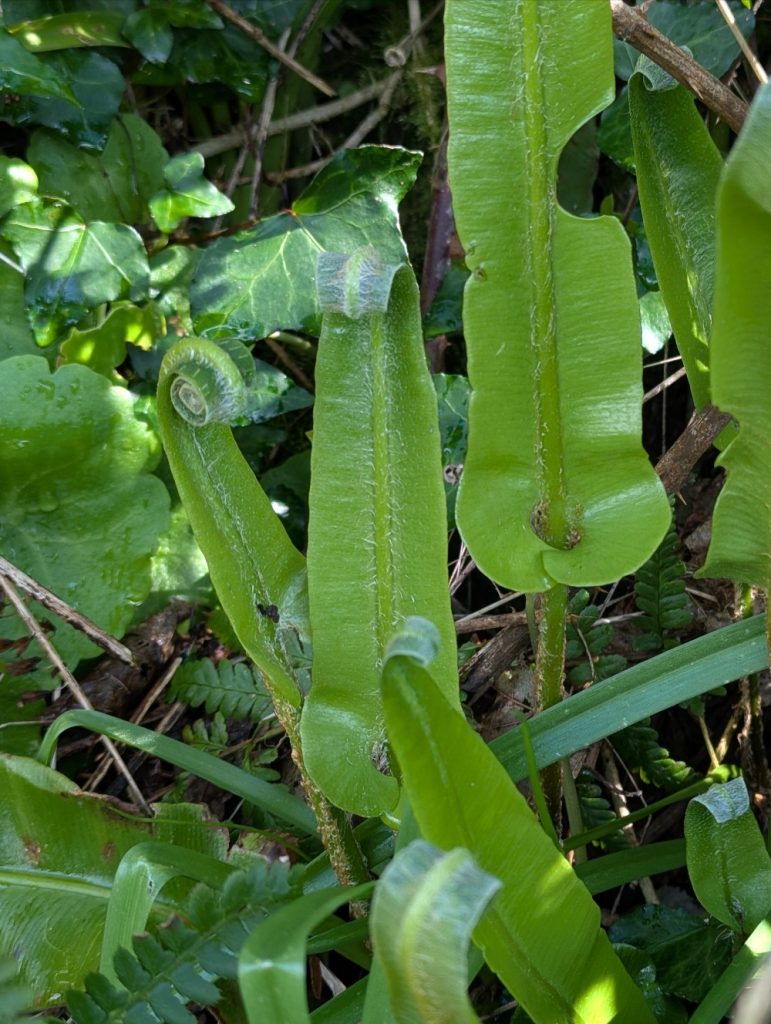
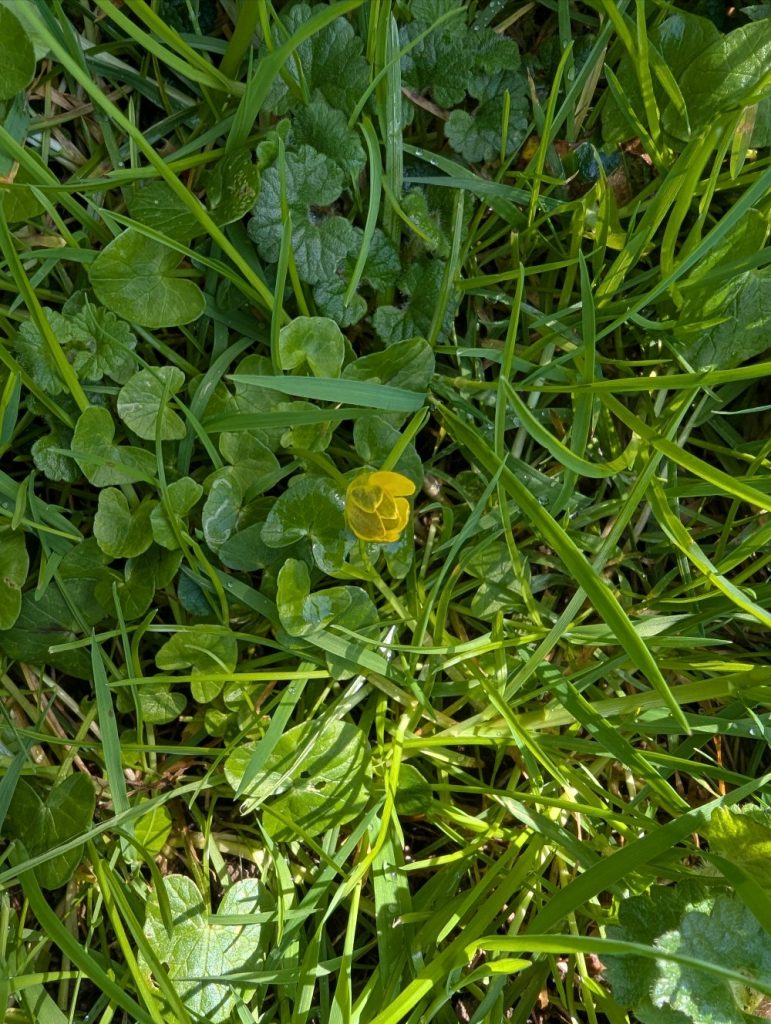
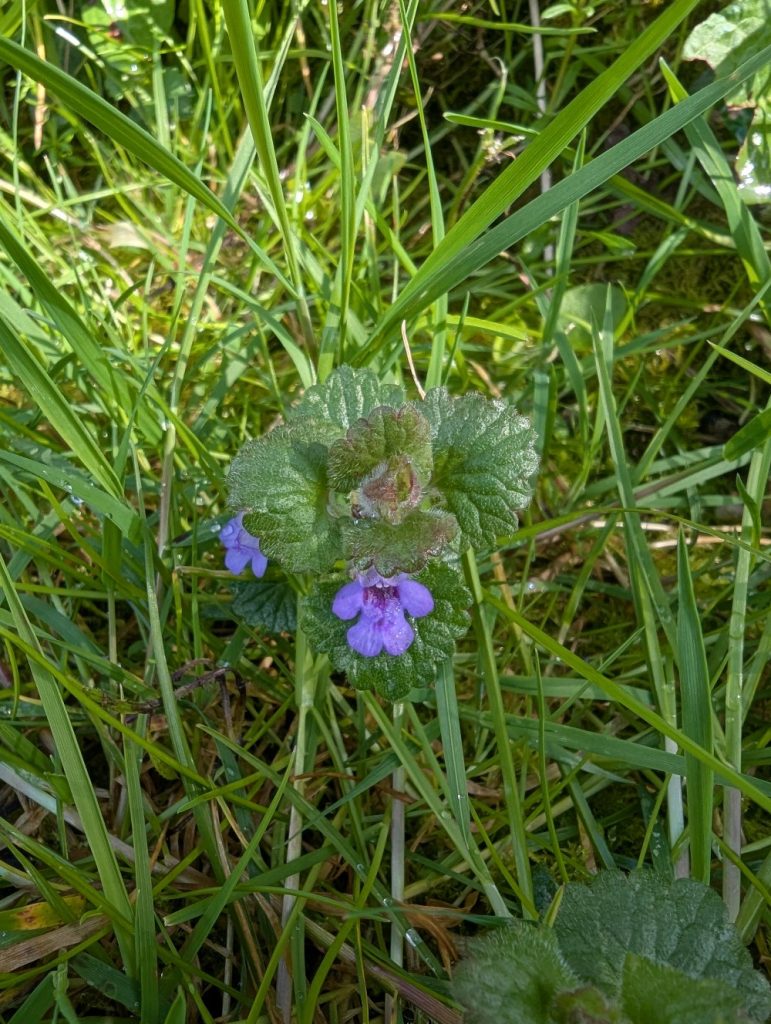
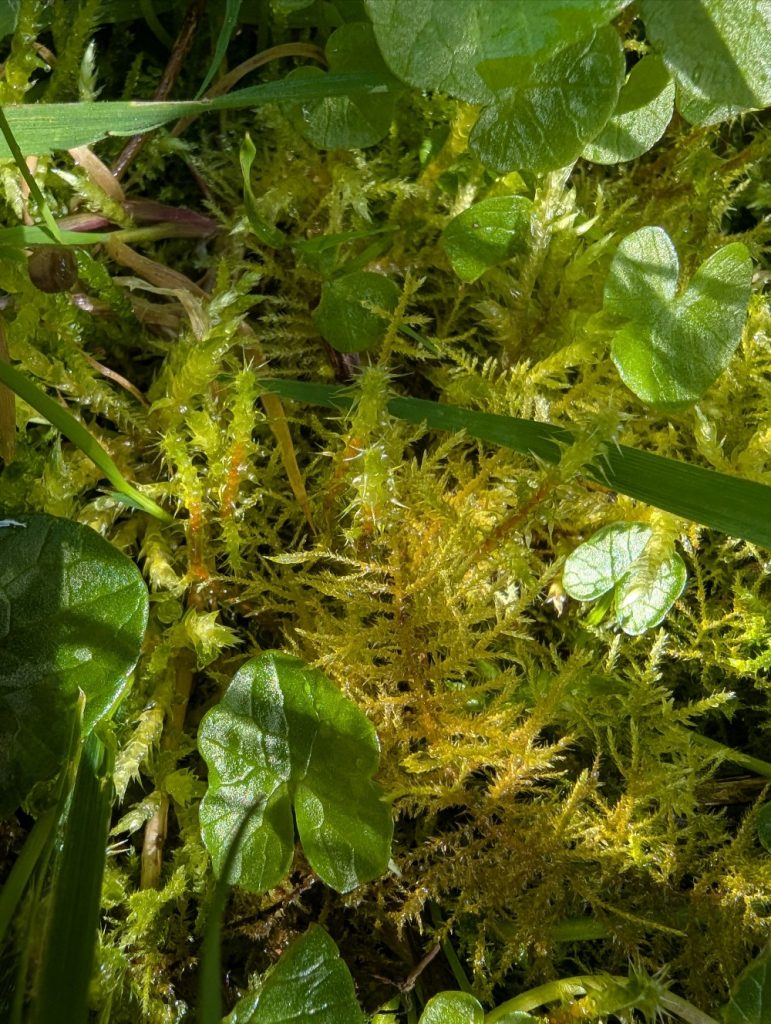
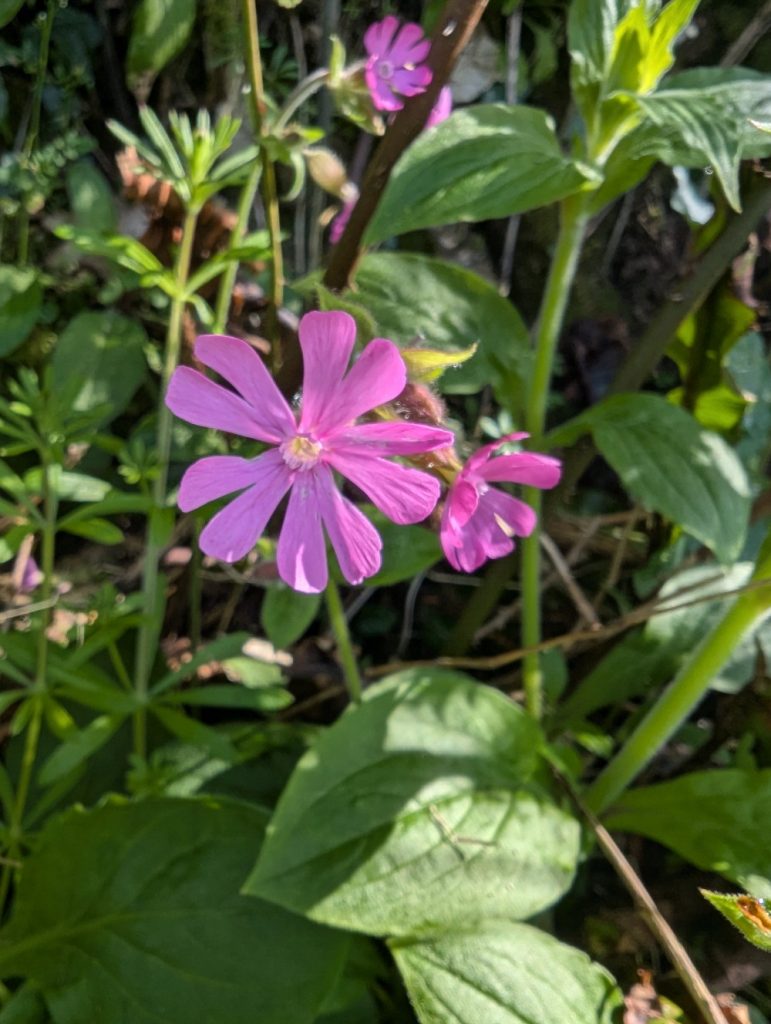
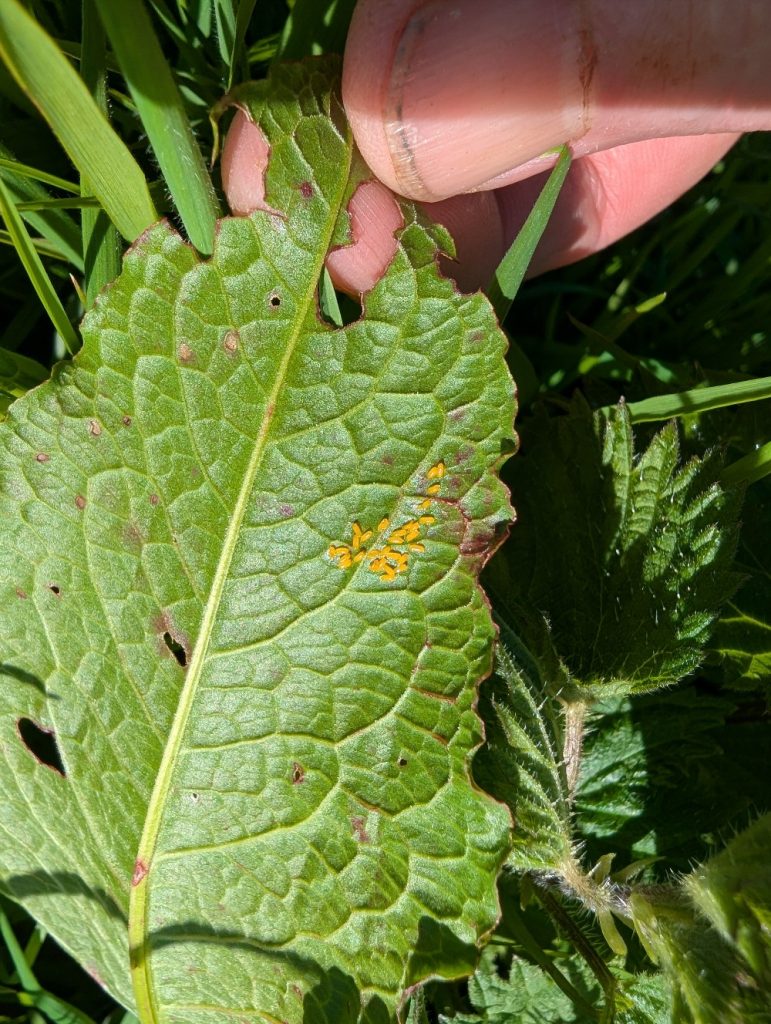
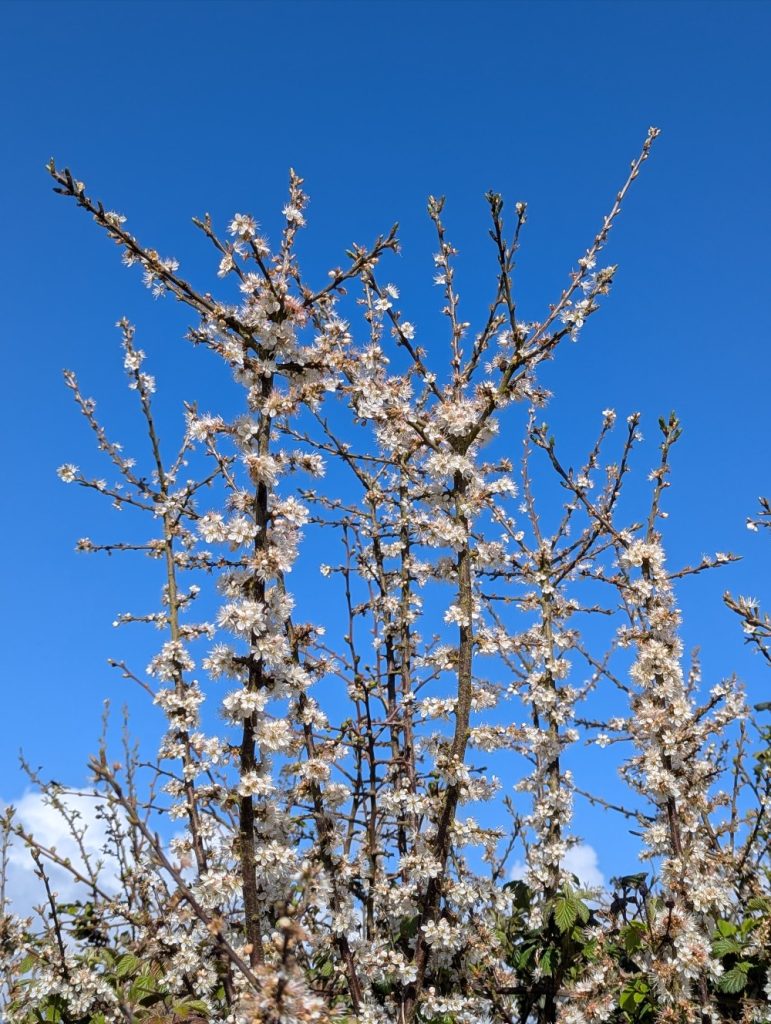
After lunch we returned to the site and conducted a detailed ‘PASE’ survey of an allocated section of field, including a wall. ‘PASE’ stands for Plants (and trees), Animals, Structures, Events. In about half an hour in field 3, I found 17 distinct species of plant, not counting the grasses. I also saw deer and badger tracks, and identified (using the Merlin app) six species of birds. Between the twelve of us we found almost 70 species of plants and trees in half an hour, and animals ranging from buzzards right down to green dock beetle eggs!
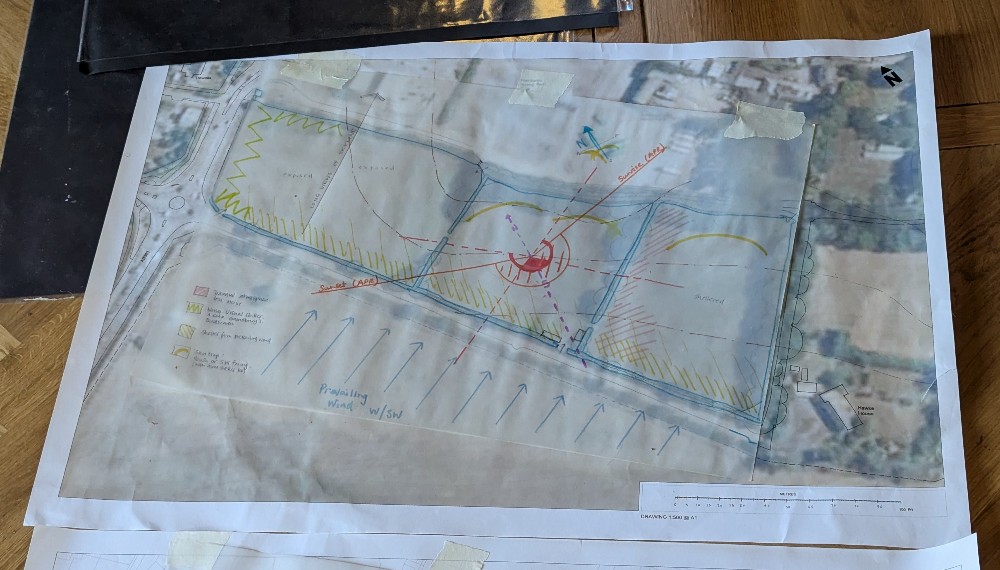
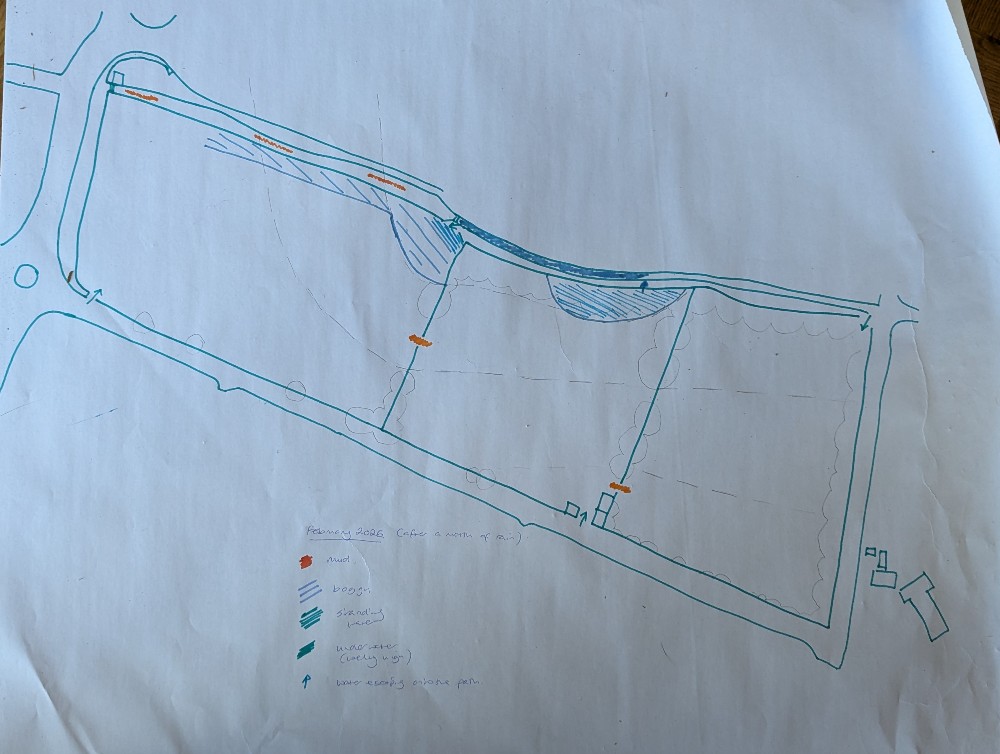
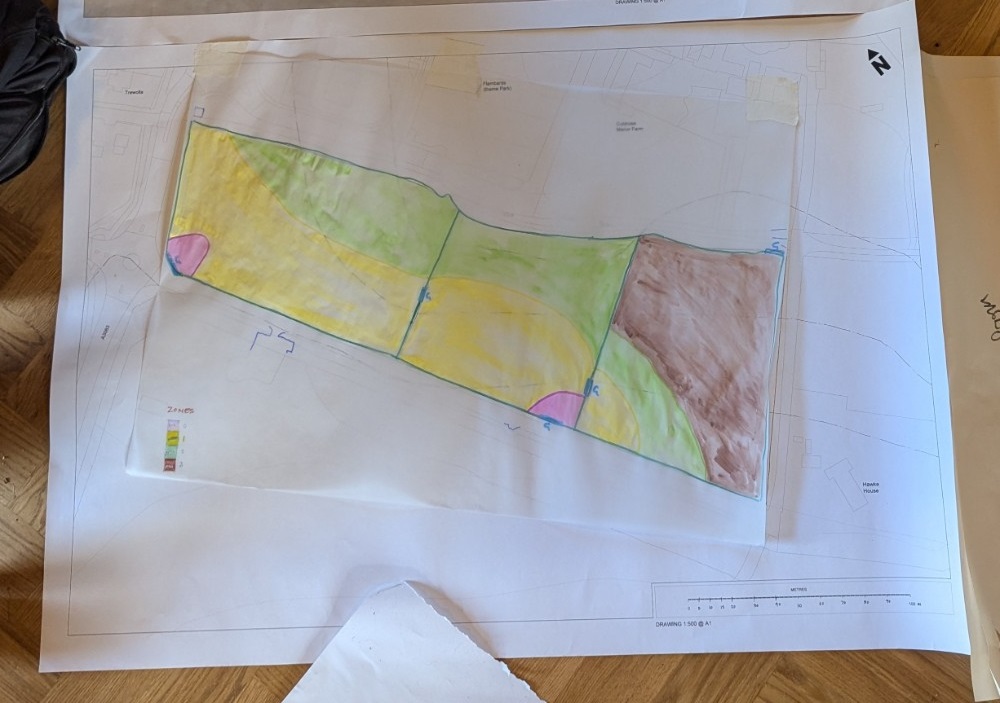
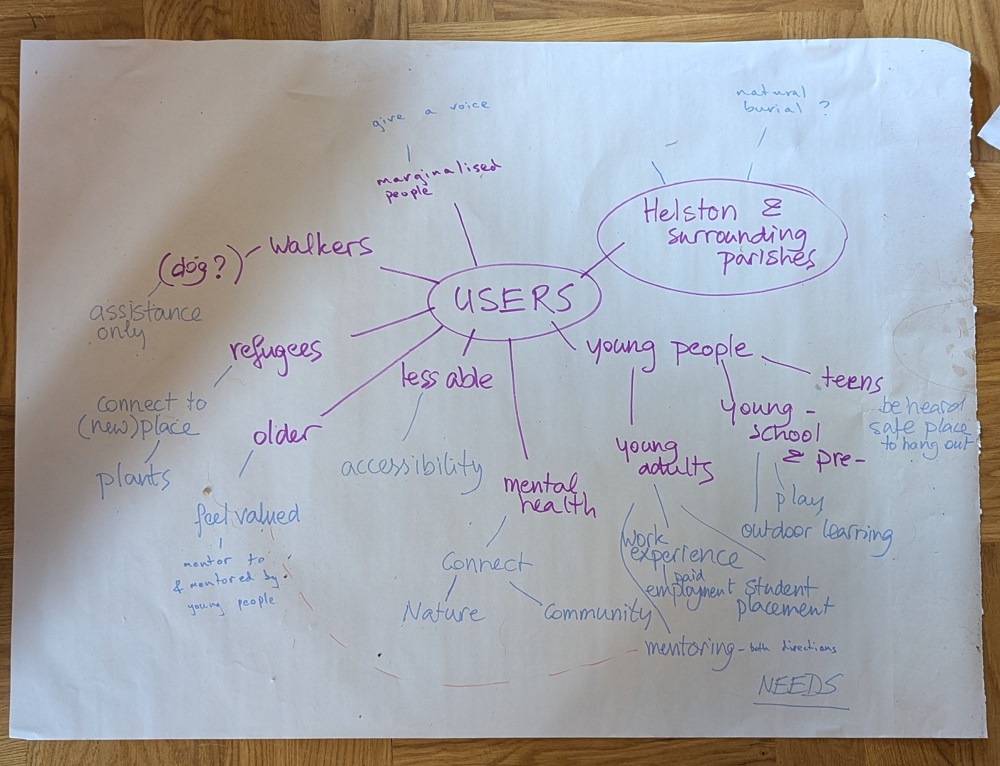
We also looked at other important survey factors, like zones and sectors, and who might be the users of the land.
We then returned to try and transfer the results of our surveying to A2 images:
As ever, we were left with lots to think about at our next session!