
On October 1st, we sat down (virtually) with planning advisor Bill Knight to talk through some ideas for the future of Downs Land and what planning considerations these might entail. Bill specialises in regenerative developments—having recently worked on the Tregovenek project and natural burial sites in Dartmoor—so he speaks our language when it comes to balancing land use with ecology. We were really grateful to Bill for his input.
Note:The following is based on our notes of the meeting; any potential errors are ours, not his. Also, this is not planning advice for you or your project, so don’t rely on anything here.
Potential “Quick Wins”: Permitted Development
Because Downs Land is under five hectares, we fall under Class B Agricultural Land rights. This is good news for our immediate community goals. We can likely move forward with tree planting, community orchards, and communal growing without a formal “change of use” application.
The existing buildings
We also have some flexibility with our existing buildings*:
- Renovations: We are permitted to repair and improve what’s already there.
- The 20% Rule: We can increase building volume by up to 20%, provided the height remains the same.
- The Catch: Development isn’t allowed within five meters of a boundary or road. Since both our existing buildings sit close to the edge, Bill is currently verifying how this restriction impacts our specific plans.
[* Since the meeting, we’ve considered whether the existing ‘buildings’ might not be considered buildings at all for the purpose of planning, as they’re very temporary in nature, and only one appears to have foundations.]
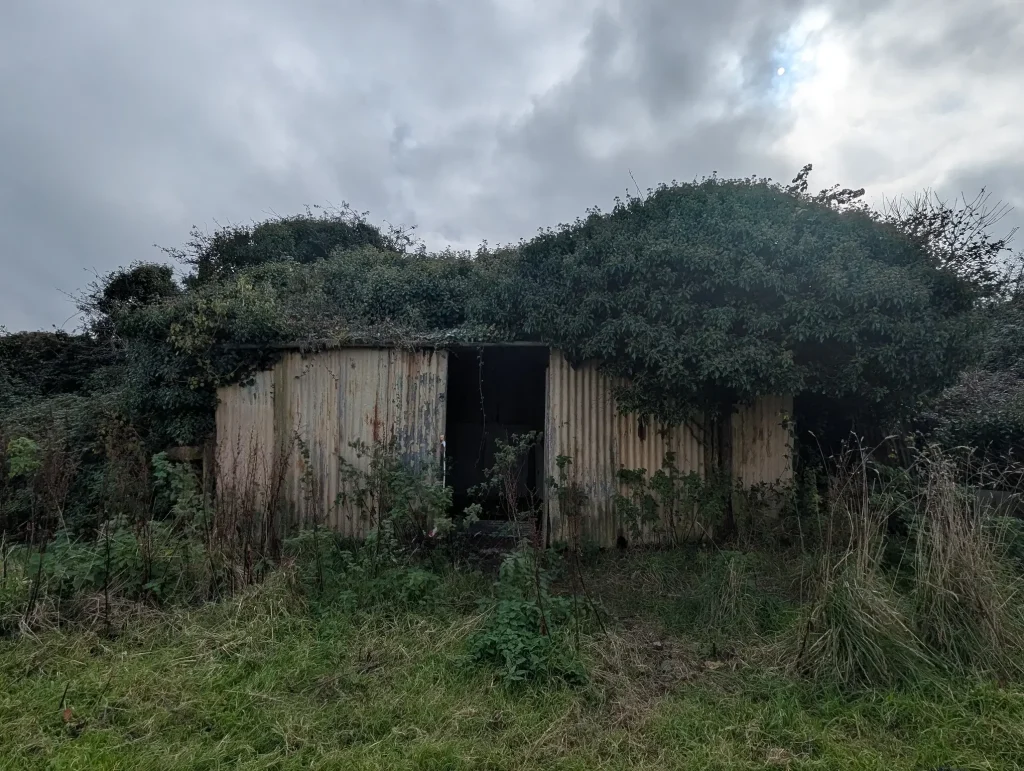
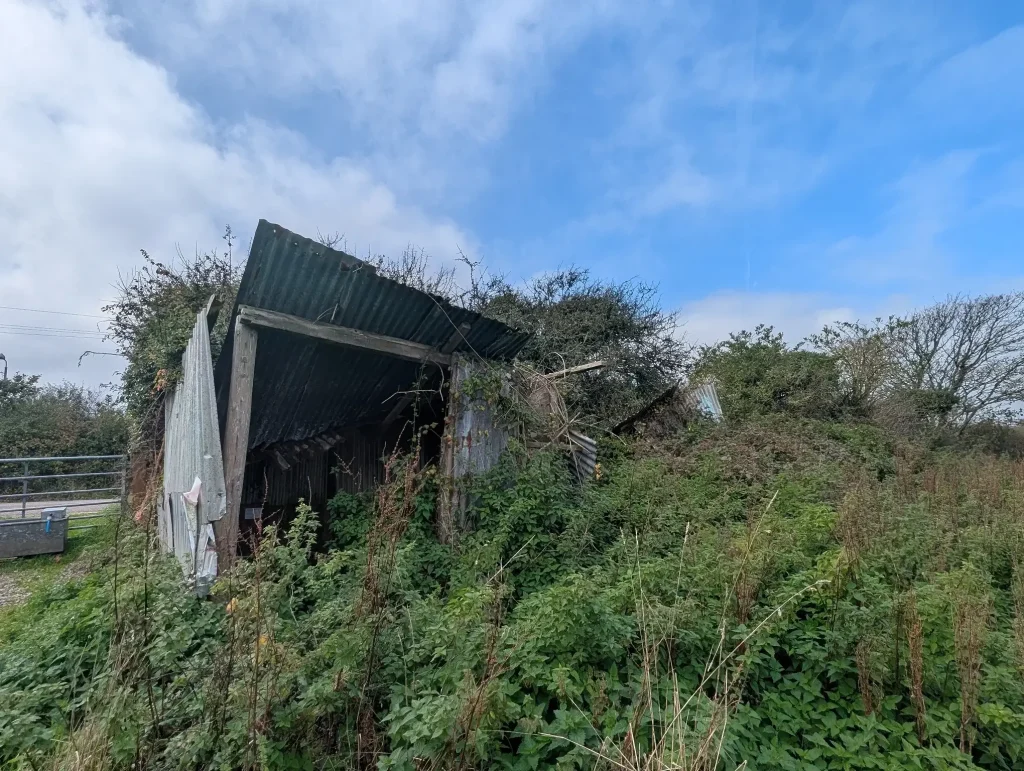
Are these buildings…?
Exploring Income Streams: Burials & Glamping
To help keep the project sustainable, we will need some source(s) of income, and we discussed two of these.
- Natural Burials: This would require a full planning application and Environment Agency approval. The Southern field is the strongest candidate, but we’ll need to dig new test pits to ensure the groundwater level is deep enough (at least one meter below burial depth).
- Low-Impact Glamping: We can host glamping for up to 60 days a year by notifying the local authority annually. The logistics are the main hurdle here: we’d need portable shower/waste facilities and a solid plan for vehicular access.
Better Access for Everyone
Getting people onto the land safely is a priority. We’re looking at two ideas for a pedestrian entrance opposite the established crossing on Clodgey Lane:
- Cutting into the Cornish hedge near Sainsbury’s. It’s the most accessible option but would probably need planning permission and “compensation planting” to make up for the hedge loss.
- With support from the Council Rights of Way team, we might be able to remove or lower the stile in that corner, and remove some of the soft hedge to provide an entrance to the site.
Ecology First, Not Just Paperwork
Dues to recent changes, every planning application now requires an ecological survey. We will need to consider carefully how we approach changing the use of any part of the fields. For example, digging up established grassland to put down a parking area could lead to ‘compensatory’ meadow management mandates elsewhere, that could create unnecessary restrictions for years to come.
Obviously, our goal with the land isn’t to engage in ‘box-ticking’ for biodiversity net gain; we want there to be genuine environmental benefits.
What’s Next?
Other than taking down the dilapidated sheds, the main plan is to solve the ‘water mystery’ and see what comes out of the permaculture design process we’re undertaking next year.