
Maintaining our new hedges at Tri Gwel
There’s more to planting trees than simply sticking them in the ground. A tree planted without any planning, protection or maintenance has a less than 50% chance of survival. So when we planted our first hedges at Tri Gwel, working with Plant One, we made sure the trees had the best possible start.
In terms of planning, we chose to plant the hedges near existing hedges, so that they benefit from wind protection and, as they establish, will hopefully form a tall, wide hedge barrier with lots of room inside for wildlife.
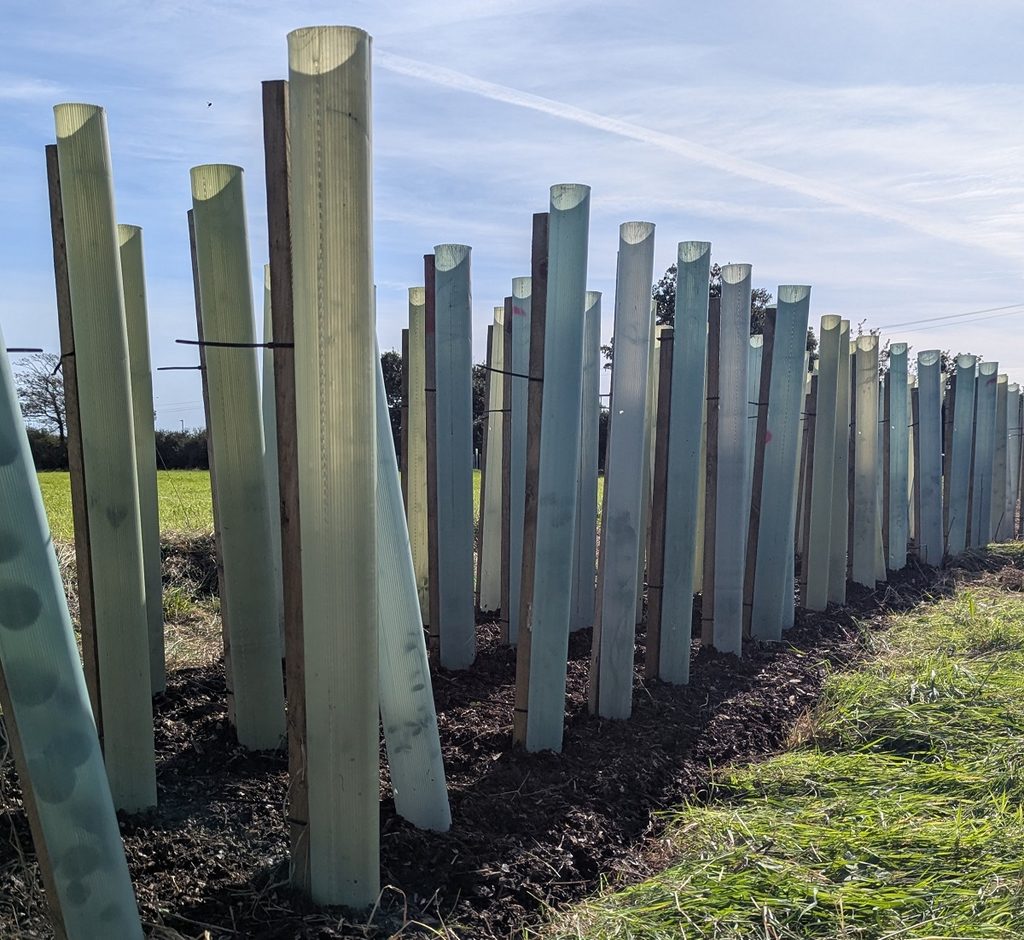
For protection, we cleared the grass from where we were about to plant, to prevent competition from grass. We firmly compacted the earth around each whip as it went into the ground, so there were no air pockets to trap water and potentially rot the roots. We added deer and wind protection with a 1.2 metre Tubex staked shelter. These will stay in place for the first 2-3 years of development. Finally, we added a few inches of mulch around the base to keep each plant warm and hydrated.
The reason we’ve got the long deer tubes on is that roe deer are regular visitors to the land. Leaf buds and branch tips are really appetising to deer, so we’ll have to monitor the trees very carefully when the tubes come off, because there may be a period when the branches are still within reach of browsing deer.
How the trees have done
That was last November. Since then we’ve been keeping an eye on the trees from time to time and by this summer, we realised it was time to start the maintenance.
The majority of the trees have done really well. Despite the very dry conditions we’ve had this year, a dog rose and some goat willow were already at the top of their growing tubes, which are 1.2 m high. That’s tremendous growth in one season.
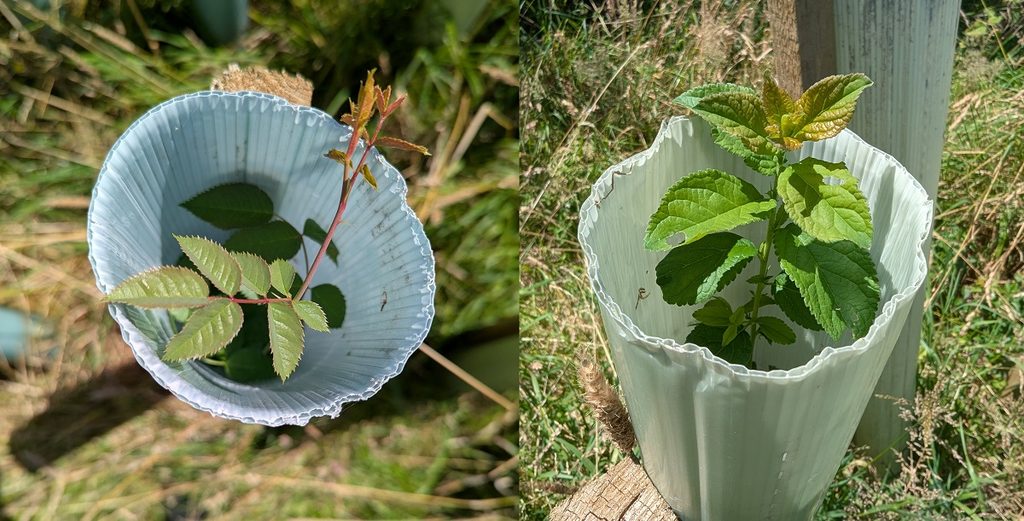
We have lost a few trees, which is obviously not hugely surprising given how hot and dry it has been. We don’t yet have water on the land except what falls as rain. We haven’t counted exactly but estimate that we’ve lost 10 to 20% of the trees. When Plant One plant trees, they typically expect 90% survival rates, so I think we’ve done all right under the circumstances. If we’d had the opportunity to water the trees, they may have done even better. (We are working on a way to provide off-grid water at the site, watch this space!)
Weeding and mulching
Even with a thick application of mulch last year, the beds had become overgrown with grass. Some of it is quite vigorous and invasive, and had even made its way up the tubes, which means it’s competing directly with the trees for light and water.
Mulching is a really important job in the early life of trees. Once they’re more established it matters less, although the more food you can give your trees, the better they’ll grow.
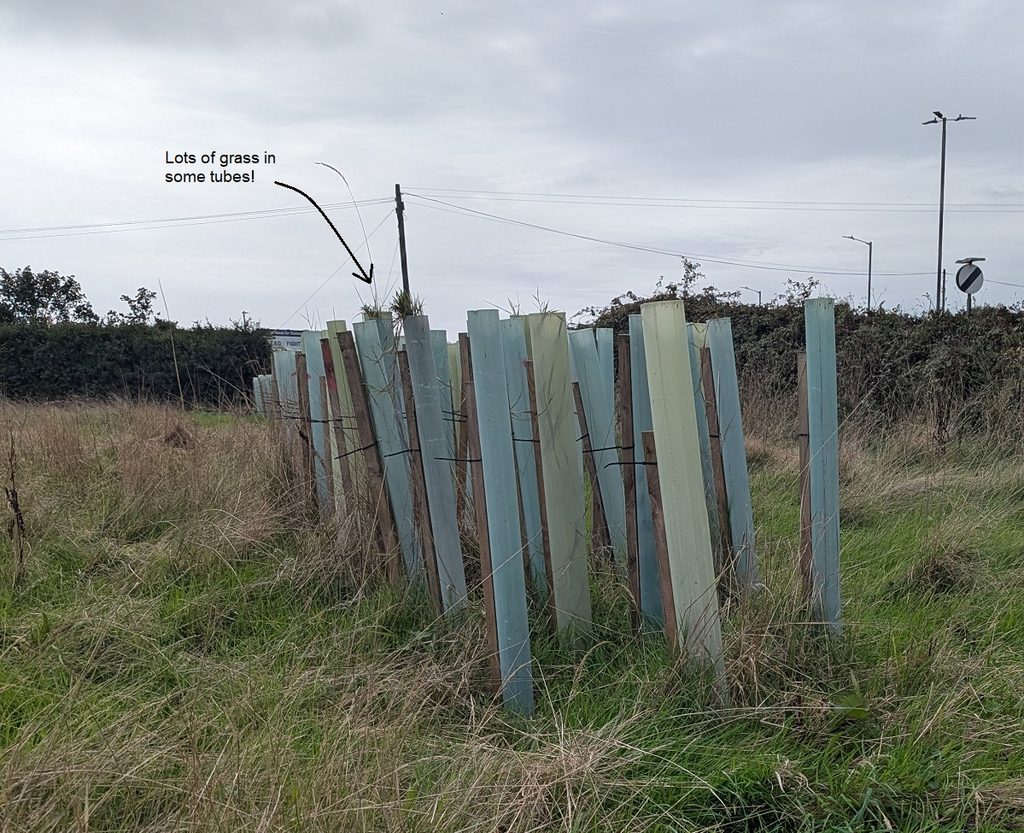
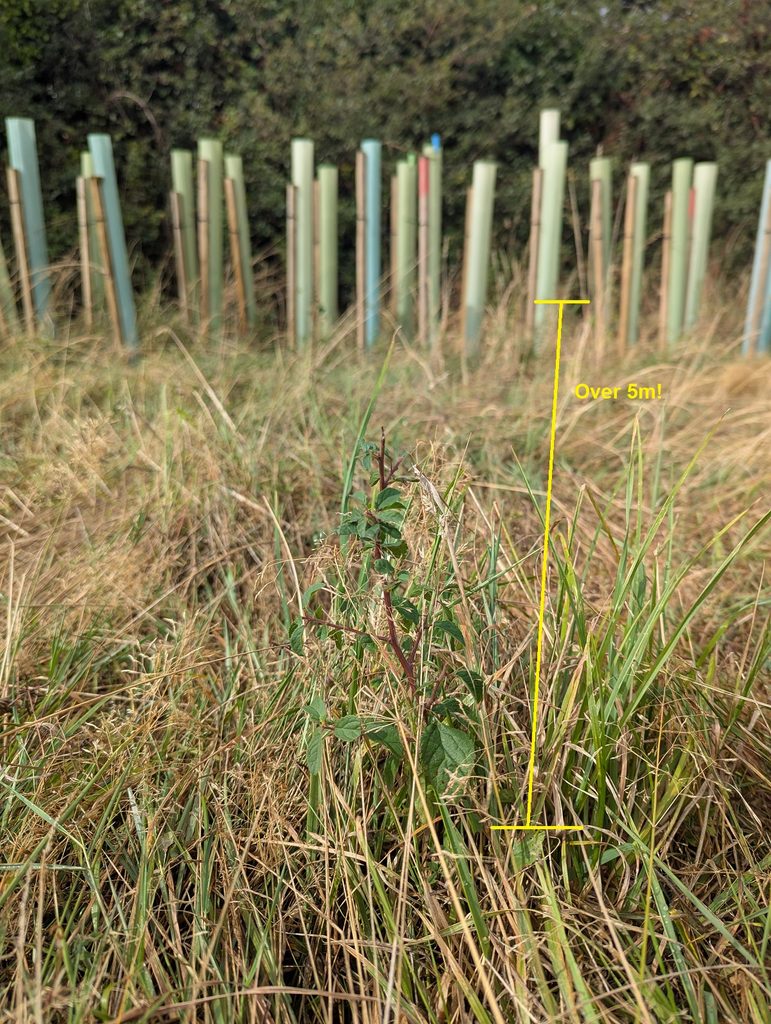
On the hedge next to Captain’s Lane, suckers from the blackthorn bushes in the existing hedge had reached out along the new hedge and even beyond, into the field. The furthest blackthorn sucker I found was over 5 m from the original hedge! We didn’t want the suckers competing with the new hedge, and we certainly didn’t want them in the field, damaging scythes or mowers. So they had to come out.
Then we had to clear the grass from in and amongst the saplings, and particularly from inside the tubes. Typically, we pull out all the grass and then lift the tubes a few inches. We pull down any grass growing up inside and carefully uproot it, so as not to disturb the tree roots, and then secure the tube again, ready for mulching.
We still had a good pile of mulch left from last year’s planting, so we applied that to the newly weeded beds.
It takes a surprising amount of time to weed and mulch trees. We began the process in July, and started logging our volunteering from mid-August. Since we started logging, we’ve recorded over 40 hours of weeding and mulching, so with July included it is likely well over 50! Many thanks to Pete, Milly, Katharine, Claire, Melissa, and Tegen for looking after the trees! (And apologies to anyone I’ve missed out.)
Surprisingly, in amongst the trees and the blackthorn suckers, I also found a self-seeded oak. It might have been an acorn that was in the mulch, or possibly from the nearby sessile oak. I’m not sure, but have now put a shelter on it, and it’s taking the place of one of the trees that unfortunately died.
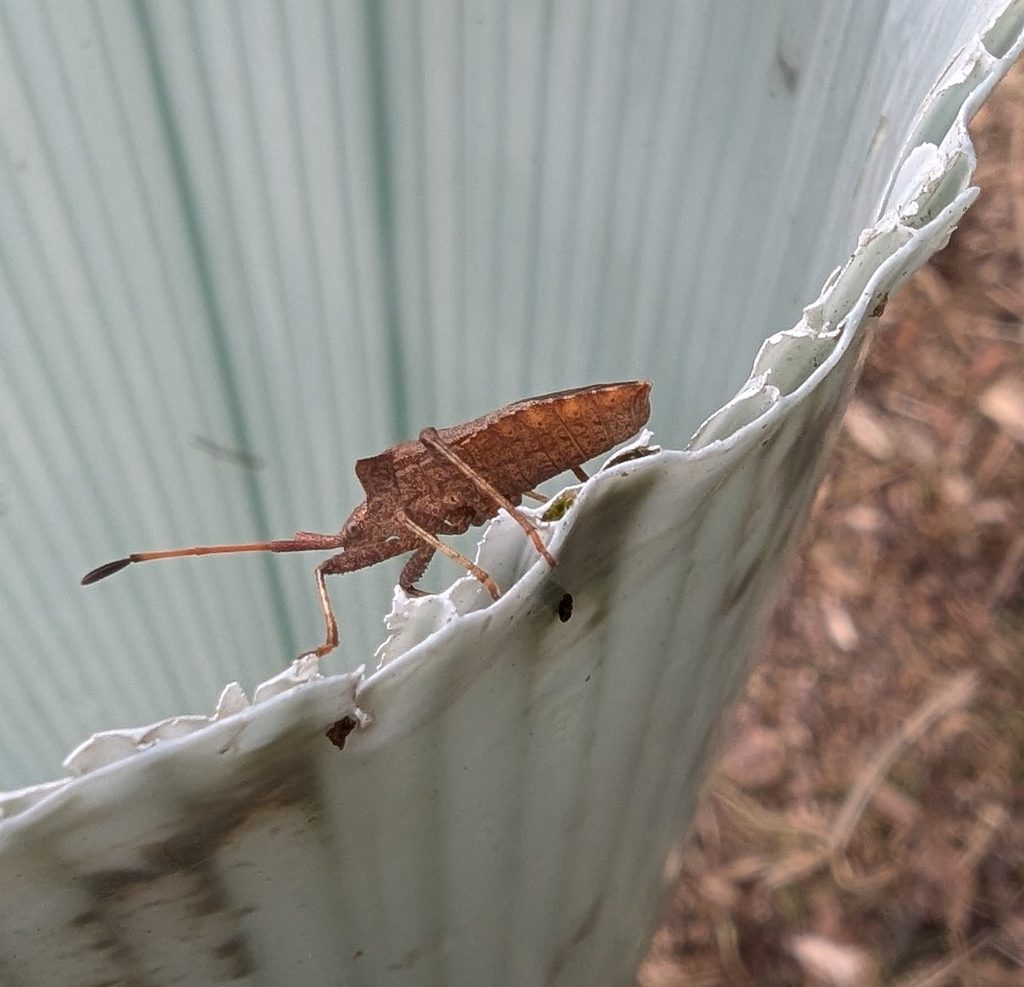
There is a lot of life in the soil and on the plants, despite the dry weather. The mulch is full of insects and spiders, and there are lots of worms, which is always a good sign.
Looking ahead to November
When we plant again in November, we’re looking to extend the Clodgey Lane hedge, fill in some gaps left by trees that have died, thicken the hedge nearest Sainsbury’s, and possibly start on our woodland planting if there are trees left over!
As an experiment, we’ve laid a section of cardboard covered in mulch, which will hopefully rot down in time for the planting and make it easier to protect the new whips when they go in, rather than having to dig grass out with a mattock.
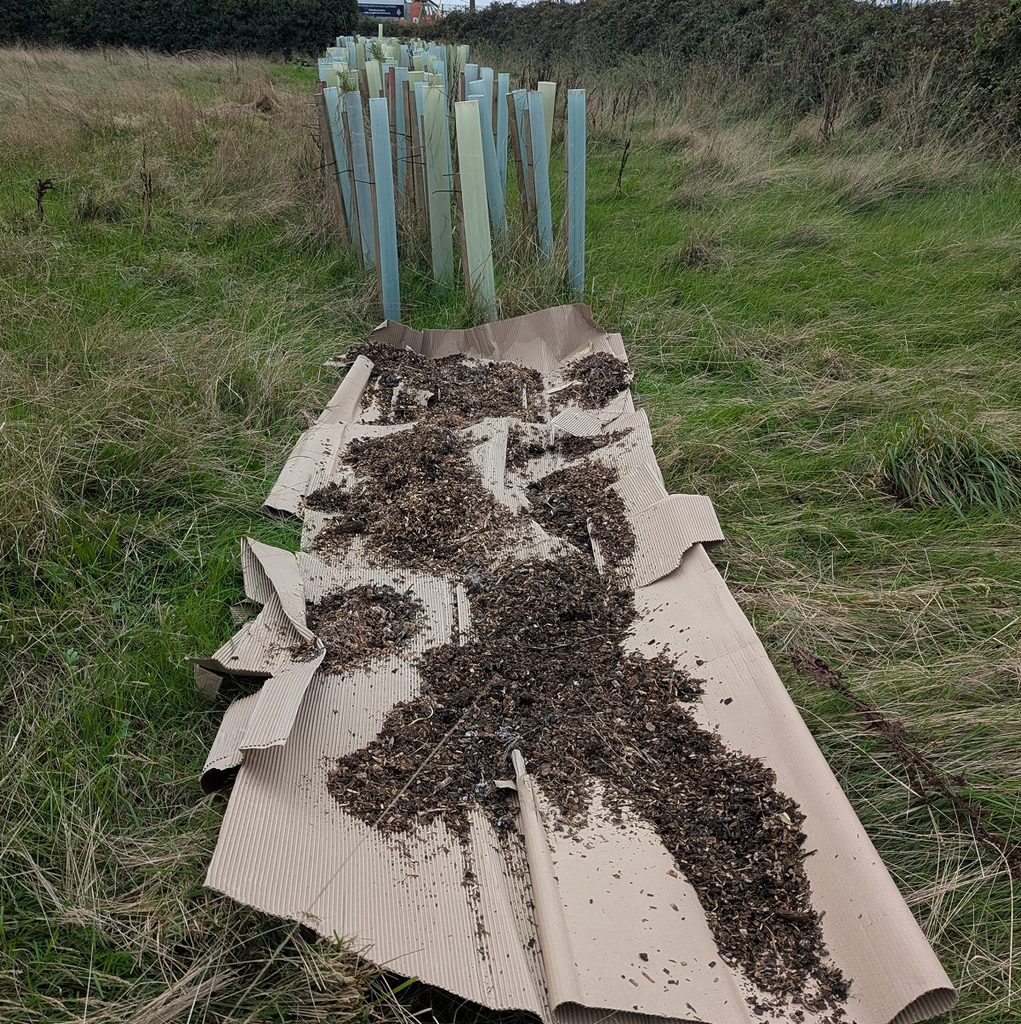
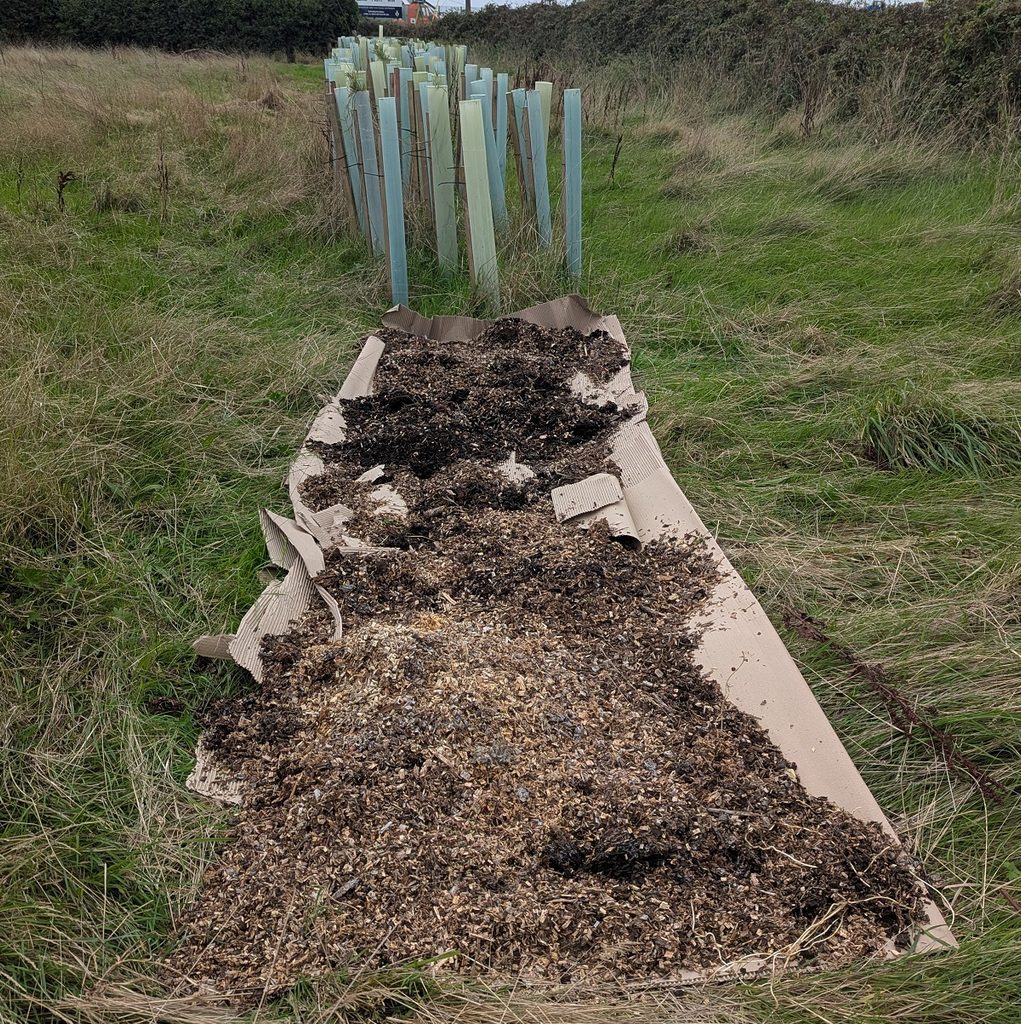
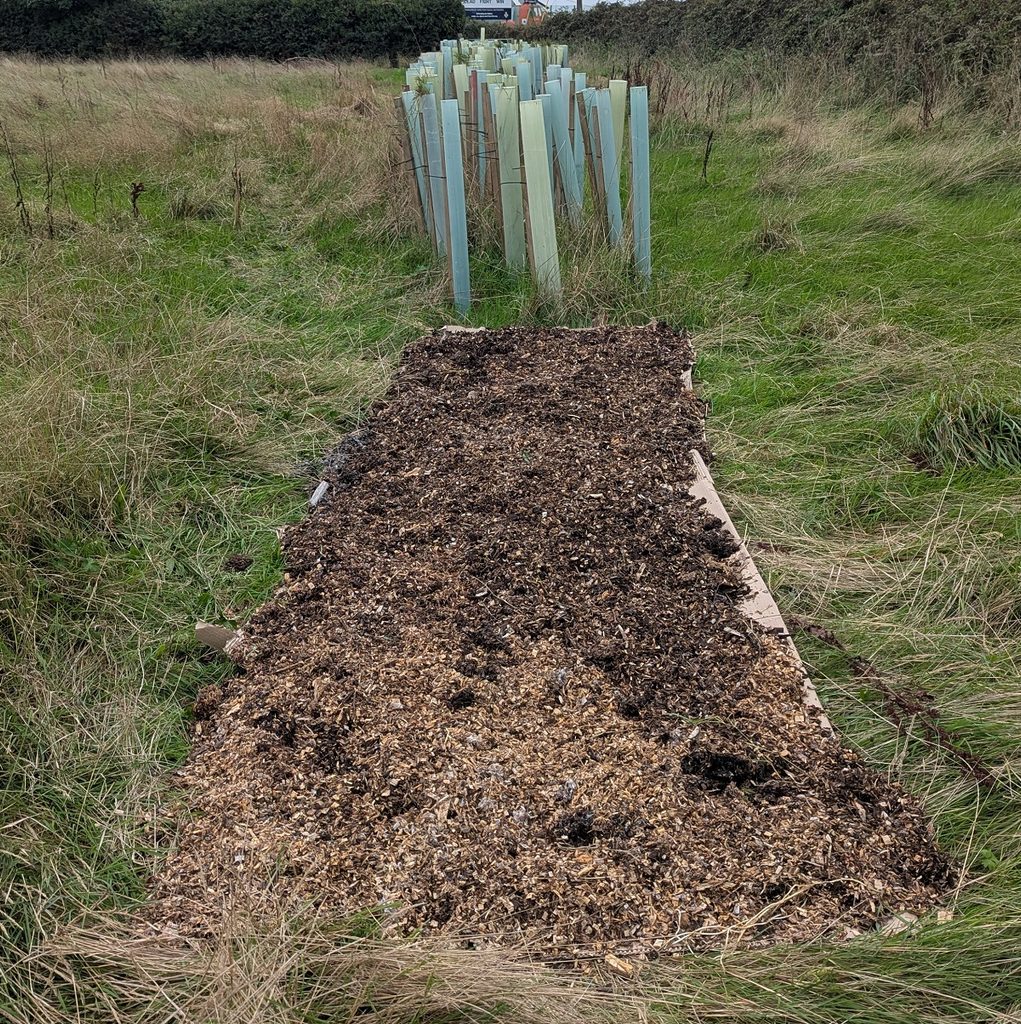
We’re also busy preparing squares of cardboard to put around planted trees to help suppress grass.
Get involved!
We’d love you to help with the next tree planting on 28 November. If you can spare some time, pop along to the site. Better still, let us know you’re coming by booking a slot on EventBrite, where there is more information about the day. That way, we’ll know we’ve got enough tea and cake!