
Saturday 19th September, Food Troops Garden, Redruth
Pete Legg and I attended a community orchard workshop at the Food Troops Garden in Redruth. The workshop was run by Michelle Lawson from Resilient Orchards Cornwall and Meike Weiser from Forest for Cornwall.
This was the first time they had run a workshop of this type, and they are keen to roll it out further if there is interest. I found it very helpful overall; it confirmed some of the reading and research I’ve already been doing, validated the permaculture design process we’ve been through on the land, and also gave a lot of new facts, tips, thoughts, and ideas that will hopefully make our orchard more likely to thrive.
The day was roughly split in four:
- Meike talked about site assessment and funding in the morning.
- We then went on a site visit to Trefusis Community Orchard, across the road from the Food Troops Garden
- We had a ‘working’ lunch back at the venue, completing an exercise on selecting apple trees
- Finally, Michelle also gave us a brief account of her involvement in the three community orchards in Redruth, and what she’s learnt from those experiences; lessons that should help other community orchards succeed.
Orchard site assessment
A lot of the following will be familiar to people who’ve been through our permaculture design process, but might be useful to others without a permaculture background. Considerations included:
- Soil. What is it like? How deep is the topsoil? A lot of community orchards are introduced into parks, and occasionally parkland is simply builders’ rubble with a thin layer of topsoil and grass over it. That’s fine for grass but not always so helpful for tree planting, so it’s worth properly assessing the soil, including its pH, in case any acidity or alkalinity needs addressing.
- Space. A proper assessment of the size available lets you decide how many trees you want and what size they should be, from dwarf to full-size.
- Water. Think about your water source and water storage/management. In their early stages, fruit trees need a lot of water, and in drought-like conditions like this summer, volunteers ideally need to water them from time to time to keep them hydrated.
- Wind. Think about wind and how much shelter you’ve got. Higher wind affects pollination, as fewer insects are able to fly in the orchard.
- Security. Theft and vandalism are worth considering, particularly if the orchard will be in a very public place.
- Permission. It’s important to have written permission from the landowner, which might require some investigation to work out who that actually is.
- Services. Be aware of where any services run under the land; Forest for Cornwall can help with this if it’s Cornwall Council-owned land.
We were also told it’s crucial to have a key team of 4 to 5 people at the very beginning, as this is much more likely to succeed than one or two individuals left doing everything, which can lead to burnout.
We also covered how to manage poor soil in parks, not a problem we have at Tri Gwel, but useful to note for anyone else reading this. You can improve a tree’s chances by digging a hole specifically for it, a bit bigger than you’d normally need, using a hand auger or a machine auger if planting a lot of trees. Digging slightly deeper than necessary lets you introduce biochar and manure into the soil immediately around the tree, bypassing any rubble, and helping it get established. You can also look at plant guilds to support the trees: for example, plants like comfrey that draw nitrogen into the soil.
While it’s great to plant grafted trees in a community orchard, it also helps to plant some bought trees that are further along in their development. People then see a mix of trees at different stages and get earlier results, and are more likely to stay involved than if they have to wait up to five years to see any fruit.
If you have space, it’s worth including large apple trees on the north side of the planting using M25 rootstock. These produce bigger, longer-living trees that are great for biodiversity, and complement the semi-vigorous MM106 rootstock you often see in community orchards.
If you’re planting apple or other fruit trees, it also helps to have room to plant willow nearby, as it provides the best woodchip for fruit trees.
Site visit: Trefusis Community Orchard
We went to Trefusis Community Orchard, part of the Redruth Orchard Project, to see the practical considerations of planting and looking after fruit trees in a public space, and some of the challenges that can arise from poor planting.
- One tree had been planted too deeply, so the graft union was at or even below the soil surface. The scion (the part of the tree above the graft) had taken root itself, so the vigour of the rootstock wasn’t driving the tree, the scion was. As a result, the tree looked smaller than expected for its age.
- Another tree had been planted too shallowly. Roots were visible on the surface, making the tree unstable and easily damaged by wind.
- Some trees had turned in on themselves as a result of the guards placed around them. This is a balancing act: guards need to stay in place to prevent damage from strimmers, lawn mowers, wheelchairs, and deer, but the lower branches that would ideally spread out laterally to form the classic goblet shape of an apple tree can be held back by the fencing. The trick is keeping the guard on just long enough to lift the branches above where a deer is interested (or, in an urban space, long enough to make the tree obvious to anyone passing by). Ground planting can help too; fruit bushes and comfrey planted around the tree make it less likely to be damaged by a strimmer or passer-by.
- We also saw the need for more than one of a given tree type in the same area, since they cross-pollinate. One pear (or possibly plum) tree hadn’t fruited, seemingly because there were no similar trees nearby to pollinate it; planting more nearby should help.
Selecting apple trees
Over lunch back at the venue, we completed an exercise on choosing apple trees for a hypothetical small orchard with space for five trees, with one likely to be shaded.
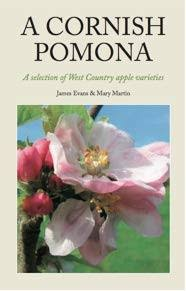
We worked through A Cornish Pomona as a reference. It’s an A–Z of West Country apple varieties with pictures, flowering seasons and uses. The suggestion was to mix dessert, cooking, and cider apples according to the orchard’s purpose, and choose a cooker or cider apple tree for the shaded area, as these need less sunshine than dessert apples and are more shade-tolerant.
We were also encouraged to choose trees with overlapping flowering seasons; apple varieties in the Pomona are given a rough flowering-time designation, and overlapping these helps cross-pollination. In Cornwall, late-flowering trees tend to do better.
Here’s what I came up with:
| Early to mid flowering | Late | Very late |
| Grow-bi-nights (cider) | Coverack (dual) | Cornish Mother (dual) |
| Manaccan Primrose (dual) | Haye Farm No.2 (dessert) | King Byerd (cooker) |
As you can see, I cheated and selected six, and also only got to ‘M’ in the A-Z, so I may have missed some beauties!
(A volunteer from the Food for All project, kindly shared a cake she had baked with us — thank you!)
Lessons from running community orchards
Michelle talked us through the community orchards in Redruth and some of the lessons she and volunteers have learnt:
- A secure storage shed on site is important, as it removes the friction of having to bring tools each time.
- Water harvesting is important; South West Water apparently has a project to help fund water harvesting. This appears to be the Better Futures Fund, which is currently open.
- Volunteers in all three Redruth orchards have their own WhatsApp groups, which are a useful way of coordinating.
- The minimum time needed to maintain an established orchard is surprisingly small:
- one or two mulching days a year (weeding around the trees and adding woodchip, cardboard or fleece to keep the base warm and moist, without touching the stem)
- a winter pruning day,
- a day of inspection and aftercare (fixing guards, adding support where needed).
- Add a summer pruning day, and you could minimally manage established trees on around five days a year, plus watering, which is more important more in the early years as trees establish.
Reflecting on the Trefusis visit, the other really helpful thing when planting an orchard with volunteers is being super clear about how you want the trees planted. There’s a specific technique that really improves a tree’s chances of success, and showing people clearly how you want it done greatly improves the odds that trees won’t end up planted too deep or too shallow. Michelle recommended this video by Wade Muggleton:
Tri Gwel project now has a copy of Cornish Pomona to help us plan our future orchard. It doesn’t seem to be widely available, but Resilient Orchards may be able to help with a copy.
Thanks to Pete for checking I hadn’t missed anything, and to Meike and Michelle for a great workshop. Consider signing up to the Resilient Orchards Cornwall newsletter here to hear about future workshops. You can also sign up to the Forest for Cornwall newsletter here.