
This year has been one of planning and figuring things out, from our name (Tri Gwel), to how we make decisions (Sociocracy), right through to the first permaculture plans for regeneration on the land.
A few of us have been getting ready in a particularly poignant way. Pete and Jules have started growing new trees from seed to plant in Tri Gwel’s fields. Below they share why they’re doing this with their own hands and what it means to them.
Jules on growing trees from seed
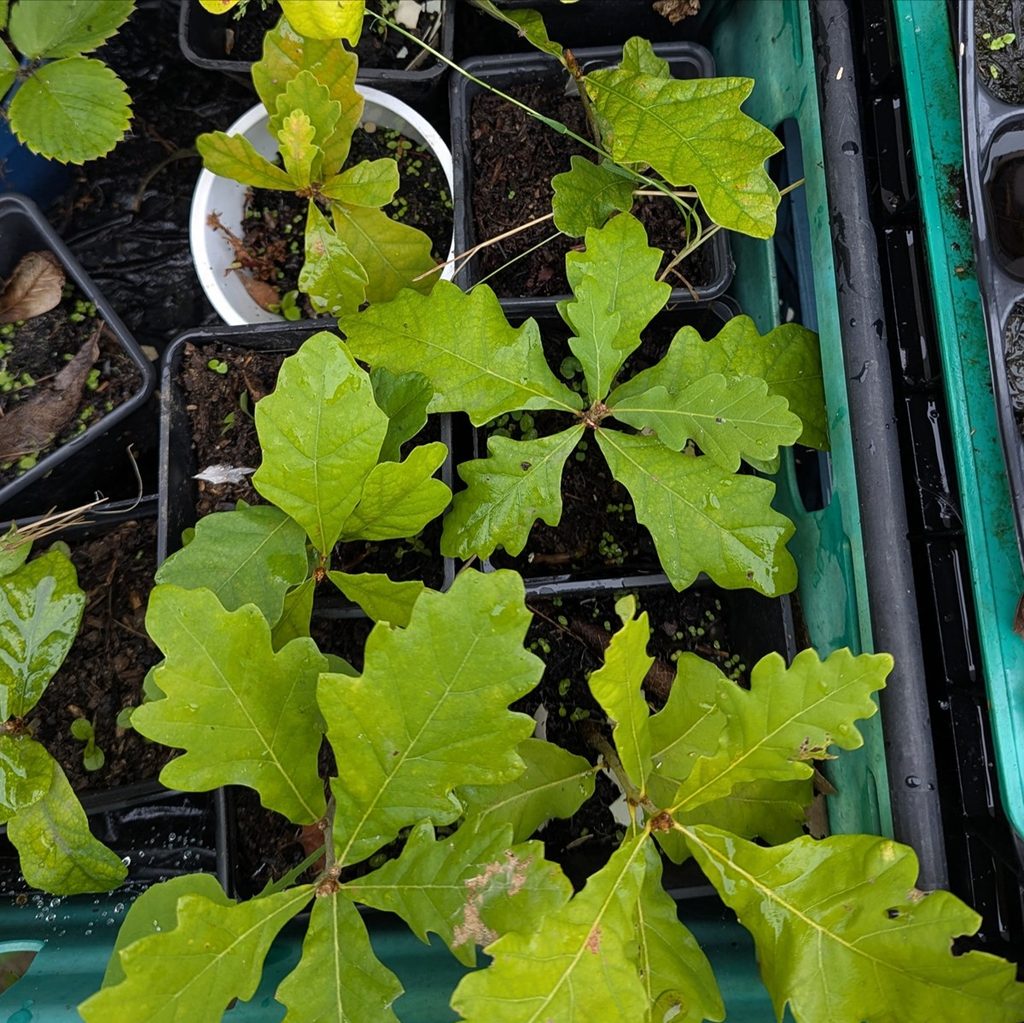
Photos and words by Jules Lewis
Having always had a small backyard in Helston, my growing love of trees since we arrived here over 20 years ago has presented a challenge. Initially I would throw myself into any project that involved planting trees on other people’s land. However, over time I noticed that next door’s ash tree was self-seeding in some of our pots and the saplings survived quite well. It eventually dawned on me that maybe I could grow my own trees from seed, and find someone else to plant them!
I started collecting acorns because the oak is one of my favourite trees. I got some to germinate and tended them to a size where they were ready to plant out, and have been passing them on to the wonderful Chris Jones at Woodland Valley Farm near Grampound. According to folklore, oaks should be grown within two miles of the parent plant, but at least these were staying in Cornwall. Chris tells me most are alive, and some are growing really well.
Since getting involved in the Tri Gwel project, there is now an opportunity to plant trees much closer to home, meaning that I can carry on maintaining them and hopefully see them grow to some level of maturity.
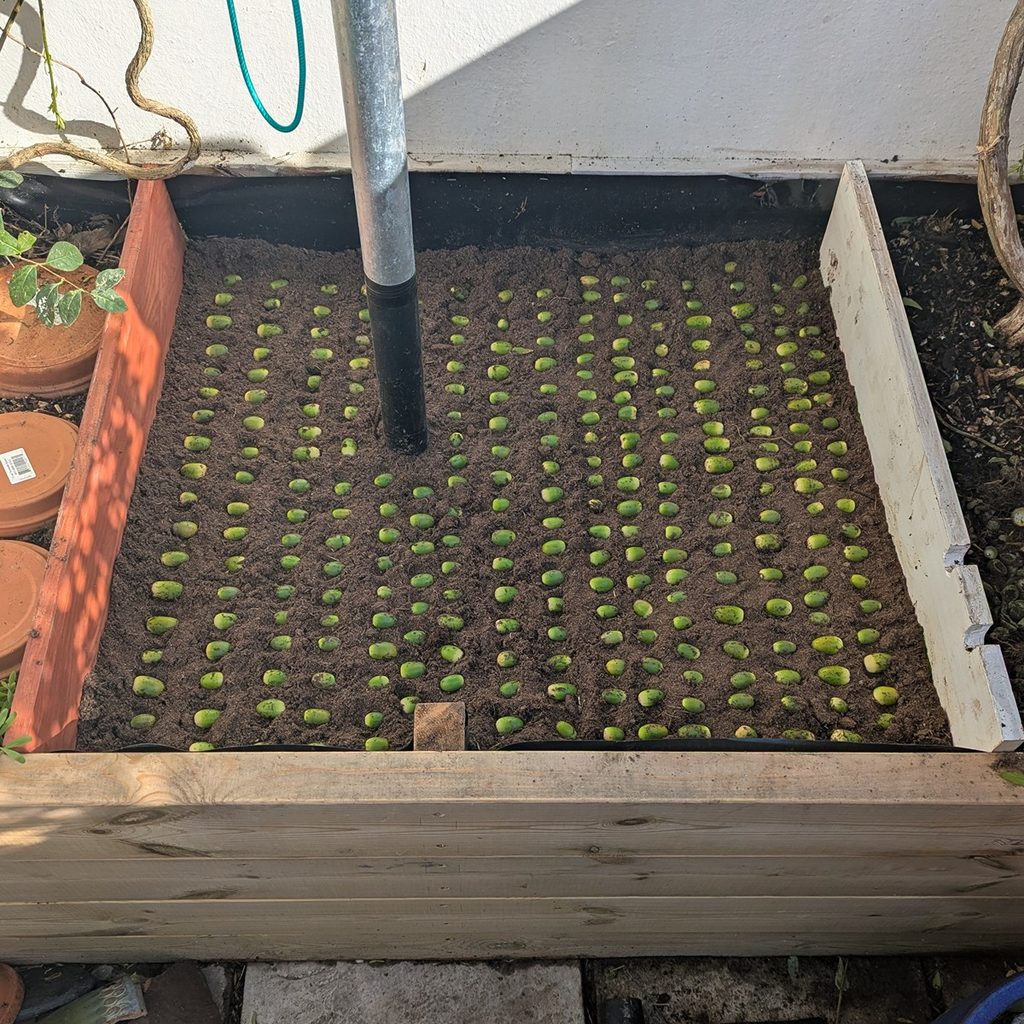
This year I’ve planted about 250 acorns, slightly hoping that they won’t all germinate next spring, though having too many trees is a nice problem to have! Oaks have long deep tap roots, so you need to give them deep pots, which can be expensive — but tetrapaks are essentially free if you’re already drinking the milk, and will end up in recycling anyway. They’re a good alternative to spending money on root trainers, especially if you can keep them from rotting. I’ve starting collecting ours, but will happily take your spares if you have any.
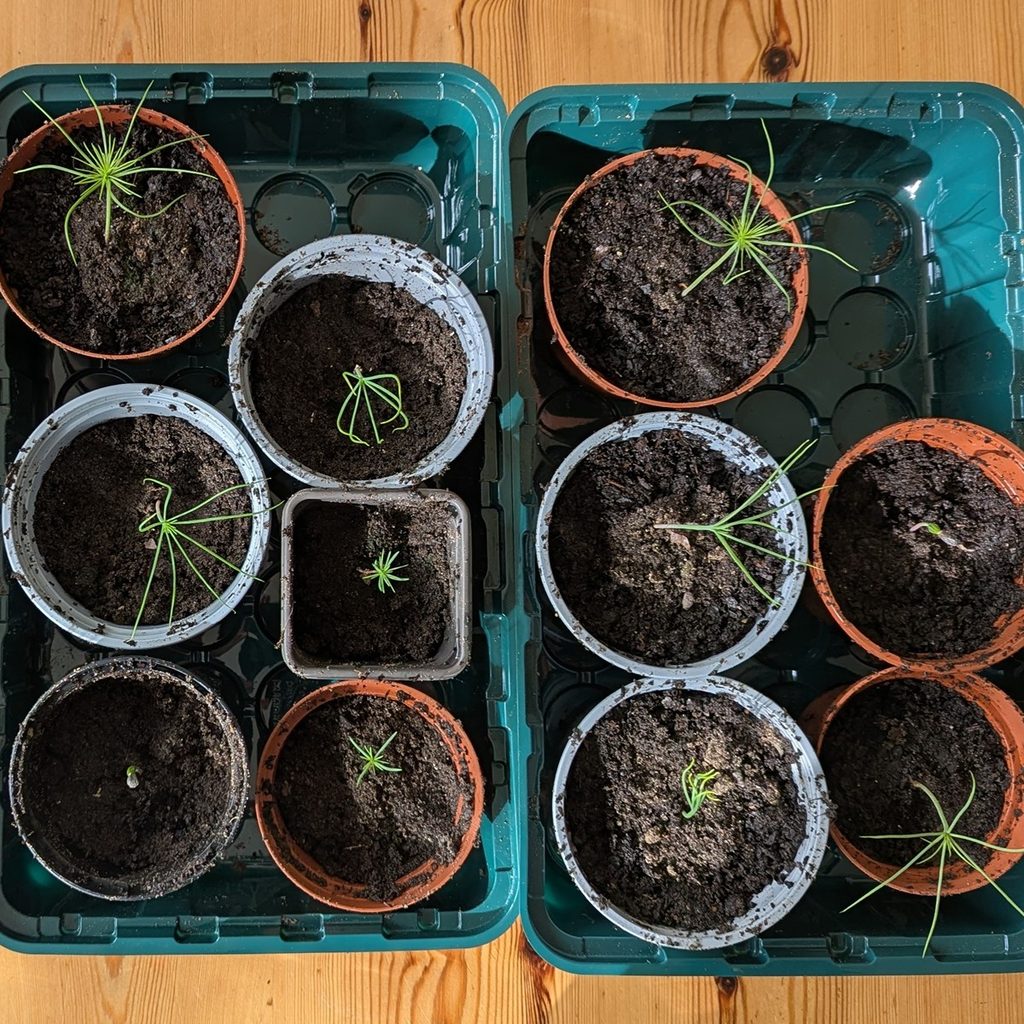
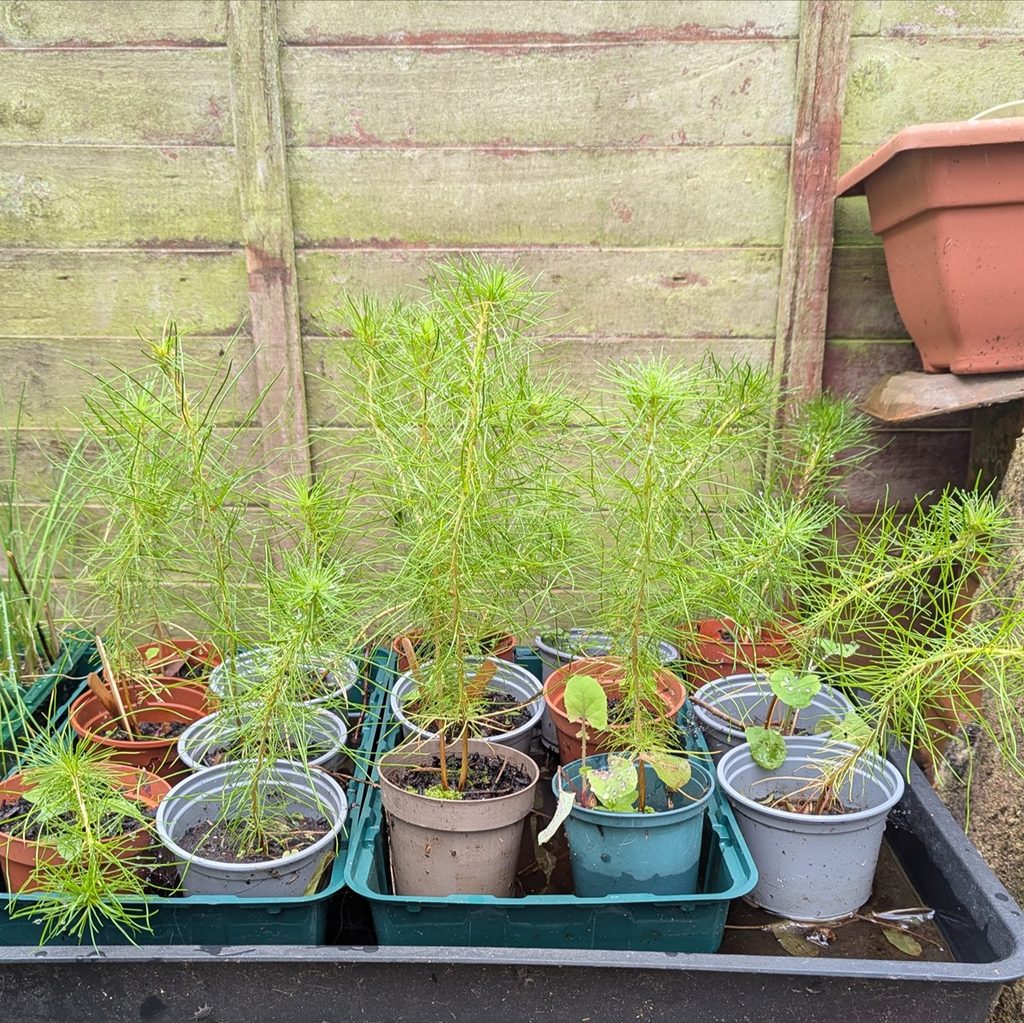
I also have some pine trees growing, but it will be a couple of years before I need to find them somewhere to plant. It’s so rewarding to grow a tree from seed, an instinct we have from childhood (did we all plant sunflowers at school?). Maybe I’m just a big kid at heart.
Pete on growing trees from seed
Photos and words by Pete Legg
I’ve had a love of trees for as long as I can remember and it’s developed into a keen interest of mine in recent years. My current foray into the world of growing native trees from seed was for two main reasons:
- In a world of ever worsening Climate and Biodiversity Crisis, I find my personal antidote to anxiety and despair is just to do something, no matter how small or insignificant, the act of a physical contribution towards positive change, makes me feel so much better. Tree planting is something very tangible, with a visible end result, for relatively minimal effort. I therefore try and volunteer at local tree planting events when I can and support local woodland creation initiatives, like the fantastic team at PlantOne: Plant One – Getting Trees in the Ground
- As a father of three, the act of collecting seeds and growing trees is such a fun and engaging (and free!) activity to do with children. Autumn walks in the local woods, collecting acorns, seeds and berries is a delight. Planting them and watching the saplings grow brings much excitement and joy to us all. I would thoroughly recommend all families get involved and give it a go. There are excellent resources online giving advice, like this handbook from The Conservation Volunteers: handbook.pdf
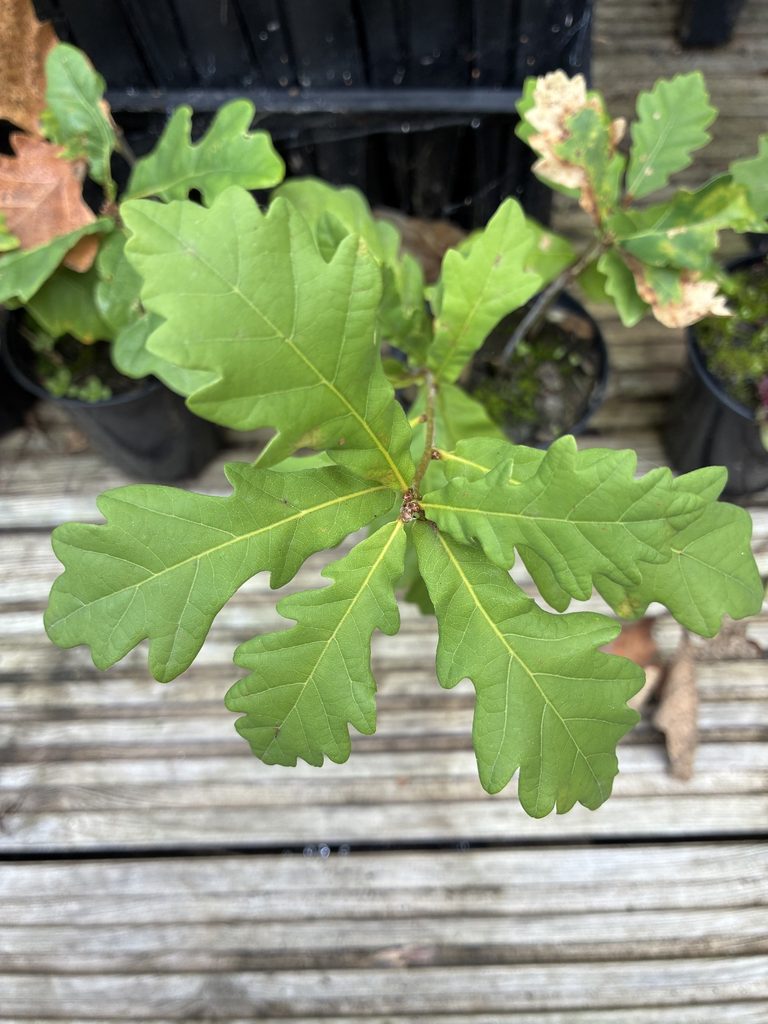
My first attempt ended in disappointment. After gathering plenty of acorns from Tremayne Woods (a beautiful Temperate Rainforest on the Helford) I planted them and left them outside, ready for the emergence of my own Oak forest, only to discover within 2-3 weeks that every last acorn had been dug up and stolen! The culprit was definitely a small mammal, but I never discovered any more. So, I had to wait a whole year for the next attempt.
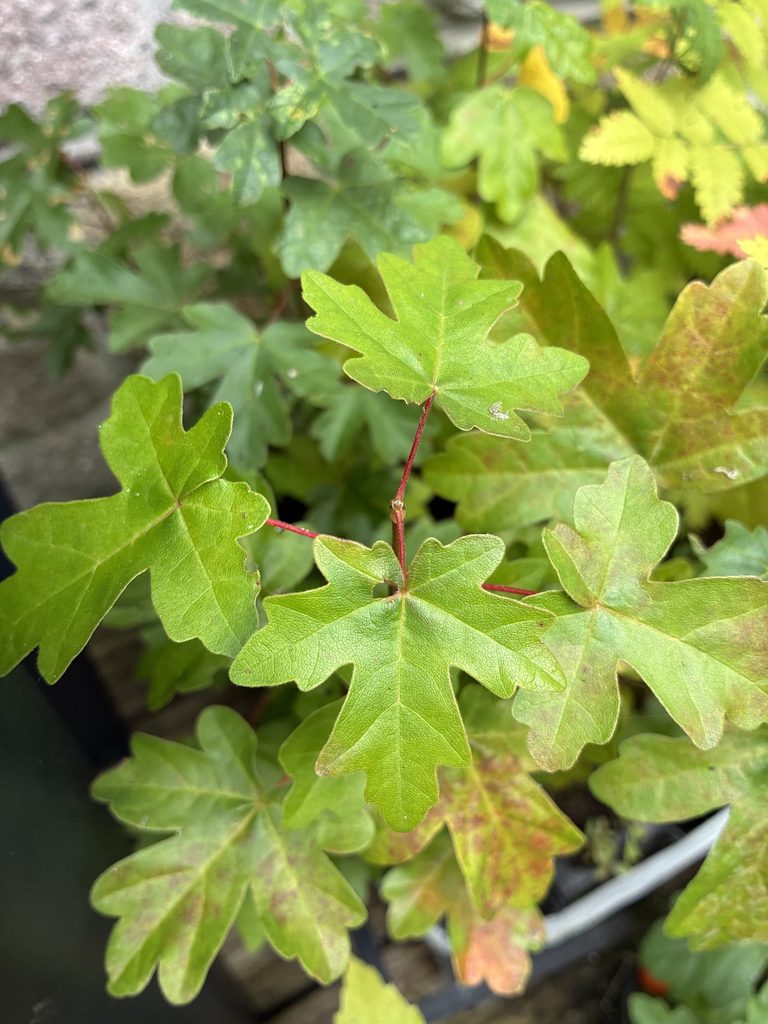
That year was particularly poor year for acorns, as oak often tend to do following a mast year, so I turned my attention instead to Field Maple and Rowan. Our native maple, the Field Maple (Acer Campestre), are a little harder to find but easy to identify, the leaves look like a smaller, more rounded version of Sycamore, and the winged seeds, are very similar to the familiar Sycamore ‘helicopters’ but with straight wings, instead of V-shaped.
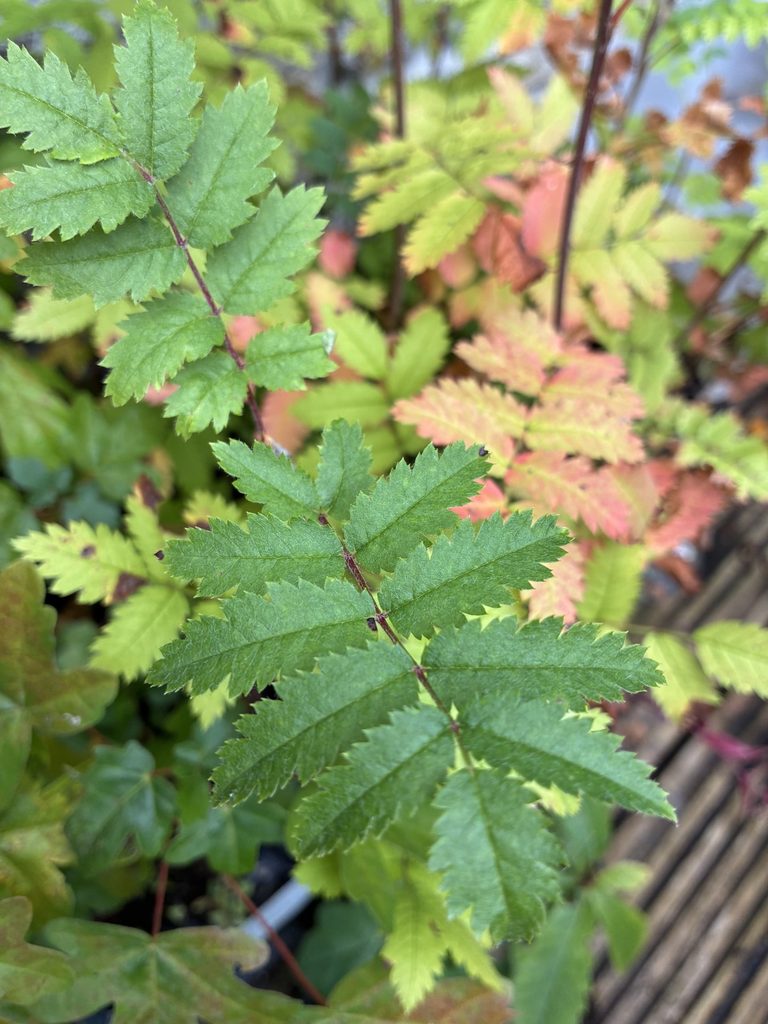
Rowan trees (Sorbus Aucuparia) are easy to identify because of their serrated leaves, in an Ash-like arrangement, and their bright red berries in the Summer/Autumn. Loosely following some guidance I had found online; the Rowan berries were squashed and seeds extracted, mixed with sand and compost and left outside over winter. The Field Maple seeds were briefly soaked and then mixed with sand and compost and left in a tub in the back of our fridge until the Spring, much to my partner’s delight.
The Spring brought emergence of tiny shoots for both species, and I sifted through to extract the strongest, planting them in reusable plastic root-trainer pots. They’ve been growing since, mostly all still doing well, and I am excited for them to be planted later this year in their forever home, at Tri Gwel.
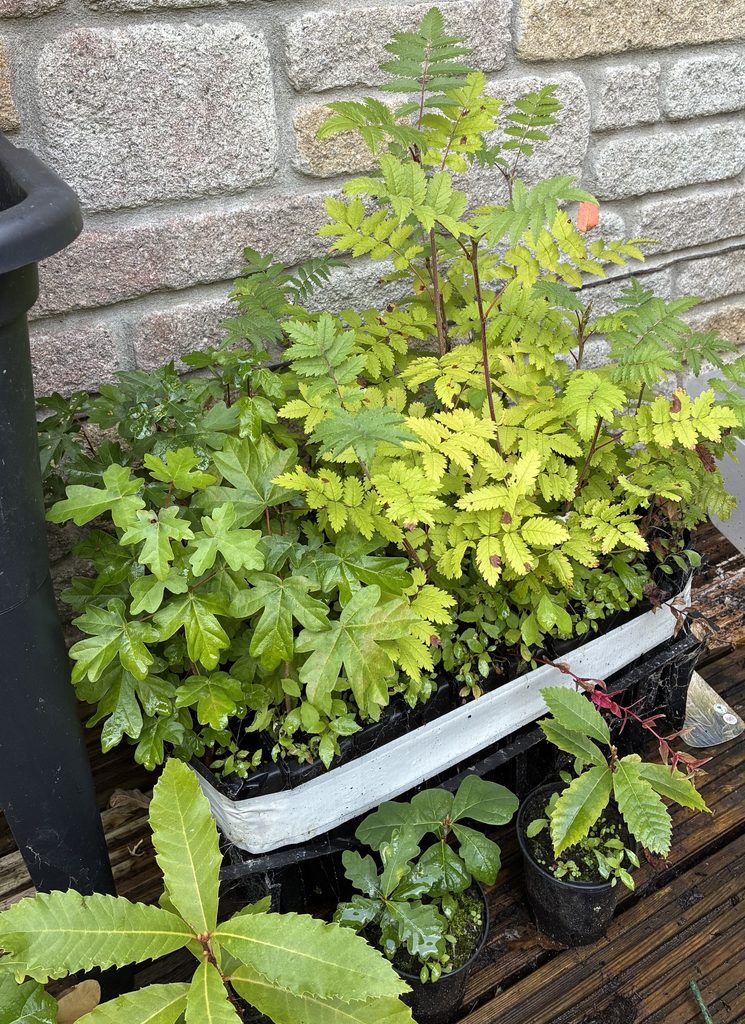
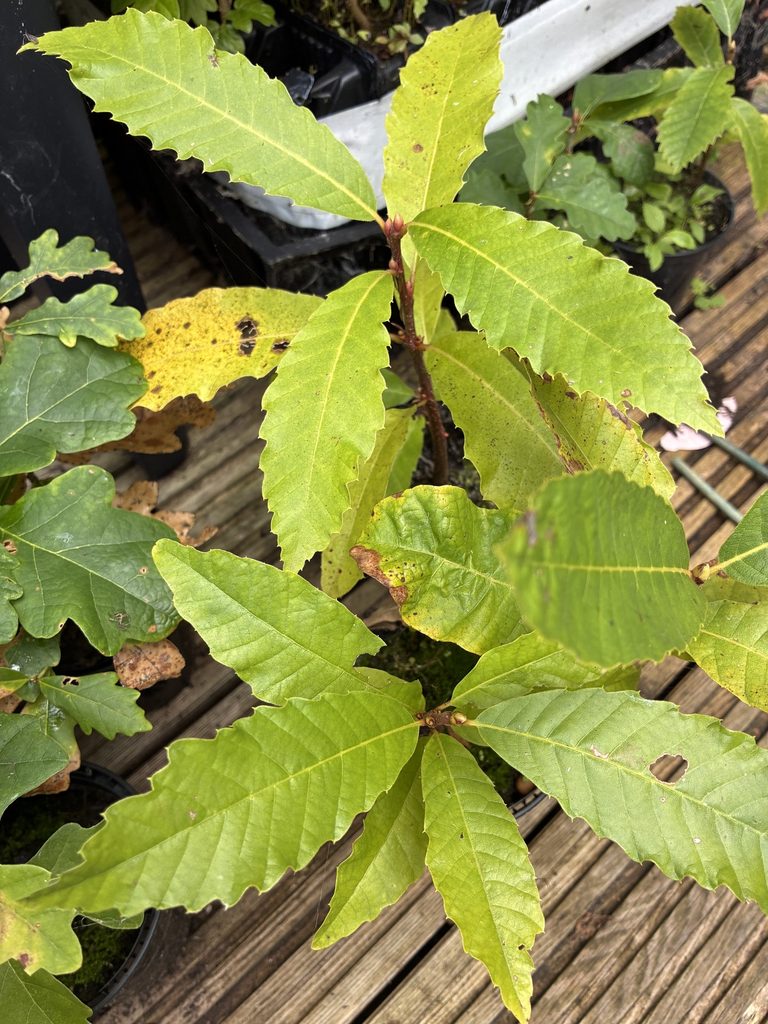
This year I have also had some success with Oak and Sweet Chestnut (again, courtesy of Tremayne Woods) and protected this time with a simple mesh enclosure I made (not making that mistake again!) They are doing well and with any luck, they too will be planted at Tri Gwel, probably late-2027.
I would strongly encourage others to give it a go this Autumn. On your next woodland walk, squirrel an acorn away into your pocket, stick it in a pot in your garden, plant out your young oak sapling when ready, and who knows; for hundreds of years to come, your descendants could be sitting under its shade.
We feel so much gratitude to Jules and Pete for growing these future parts of our world and for sharing their journeys with us.