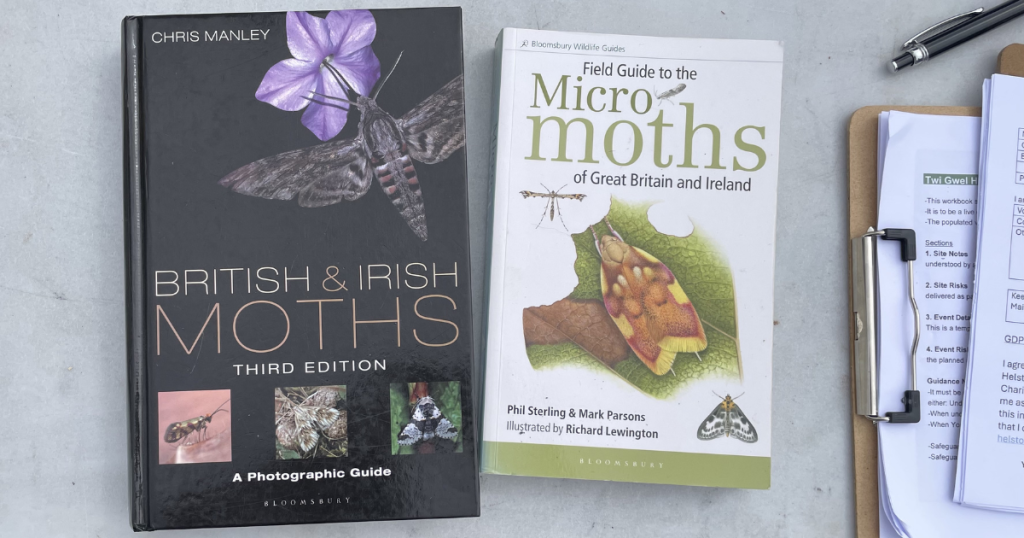
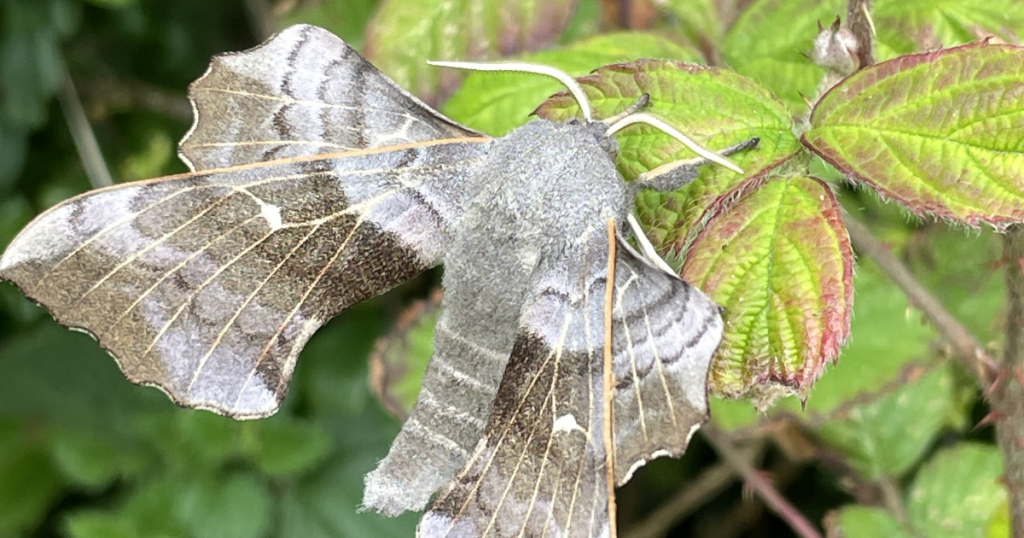
On the warm late May bank holiday, a group of us gathered to learn about moths and were surprised to hear local naturalist Dougy Wright start by mentioning the red Saharan dust we might have spotted on our cars that morning. Little did we know this is one of the signs moth specialists look out for, as it can indicate migrant moths might be arriving from Africa.
By chance the Tri Gwel mothing event had arrived the morning after the best night of the year. Not only were we treated to an eclipse of moths, but Dougy Wright was saved from the hours he’d normally spend identifying and counting the species. To give a sense of scale you might normally see a mottled willow only five times in a whole year yet Dougy estimated he had caught a few hundred the night before.
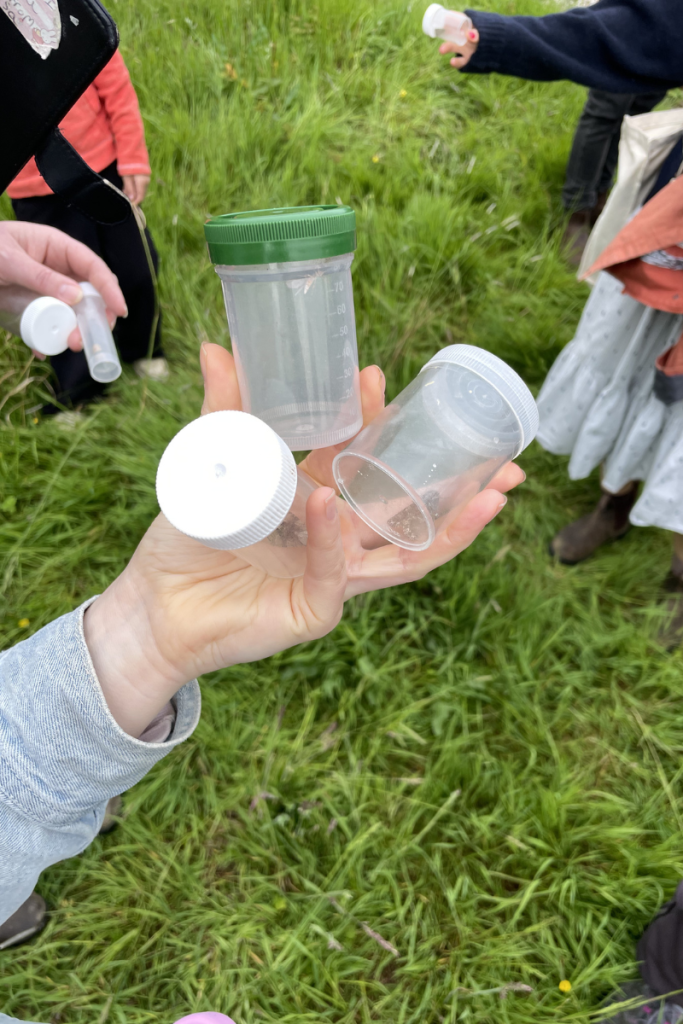
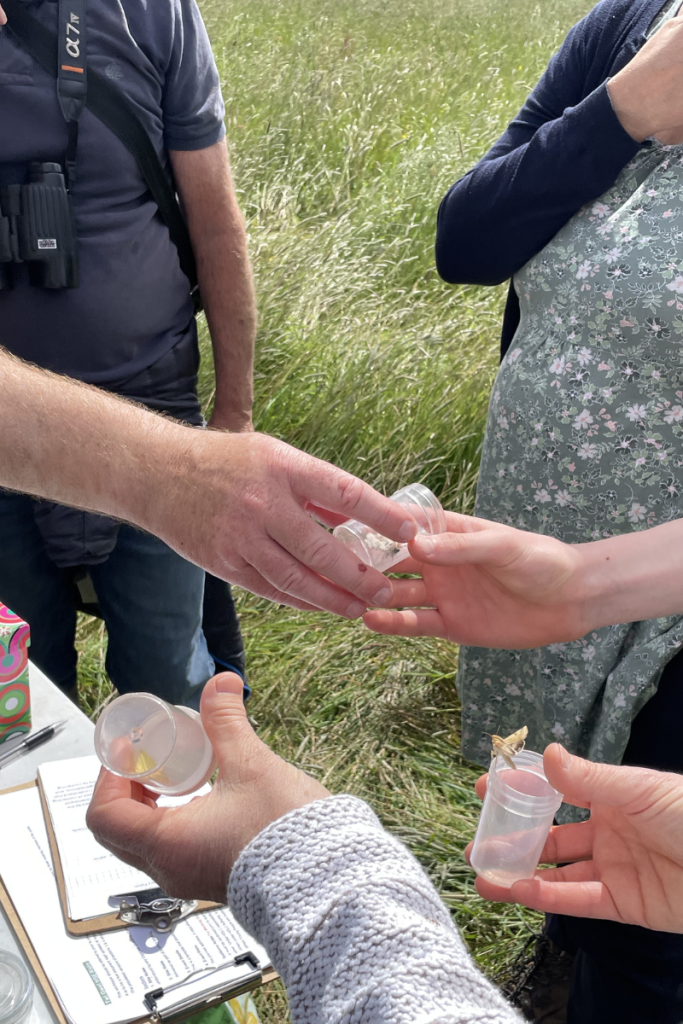
He began by handing out containers with individual moths. It is a special thing to be able to examine such delicate beauty in your hand and adults and children alike seemed giddy to be holding these fascinating creatures.
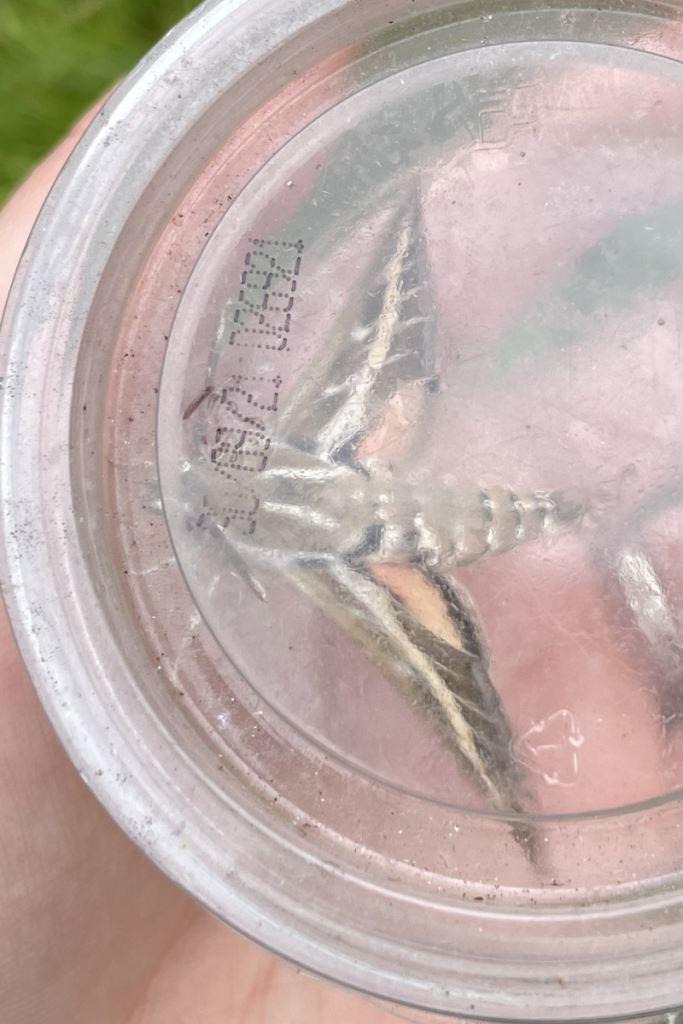
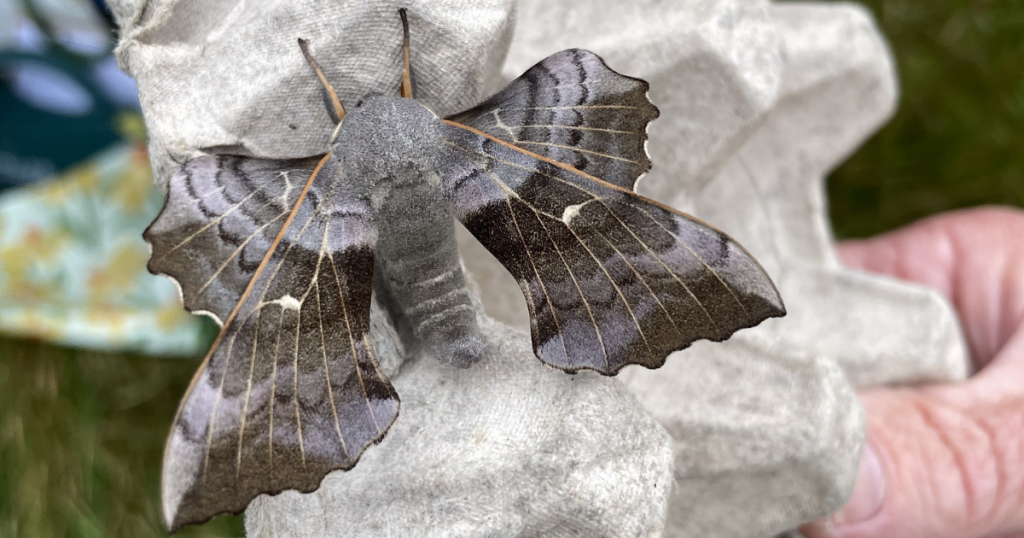
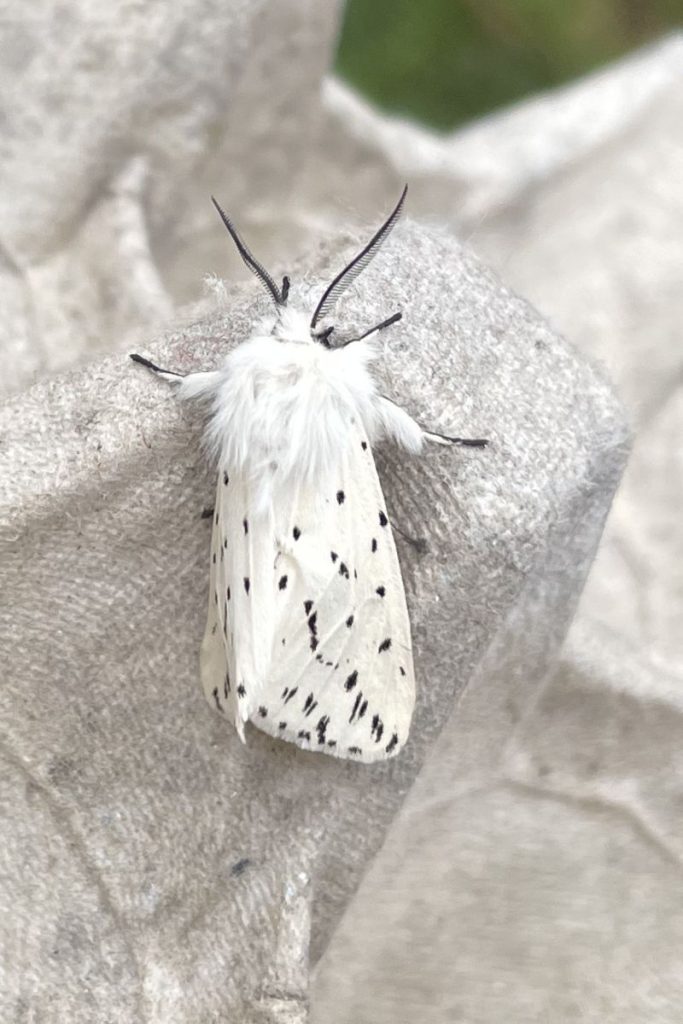
Amongst the mosaic were some showstoppers:
Striped hawk-moth
Poplar hawk-moth
White ermine
White peppered
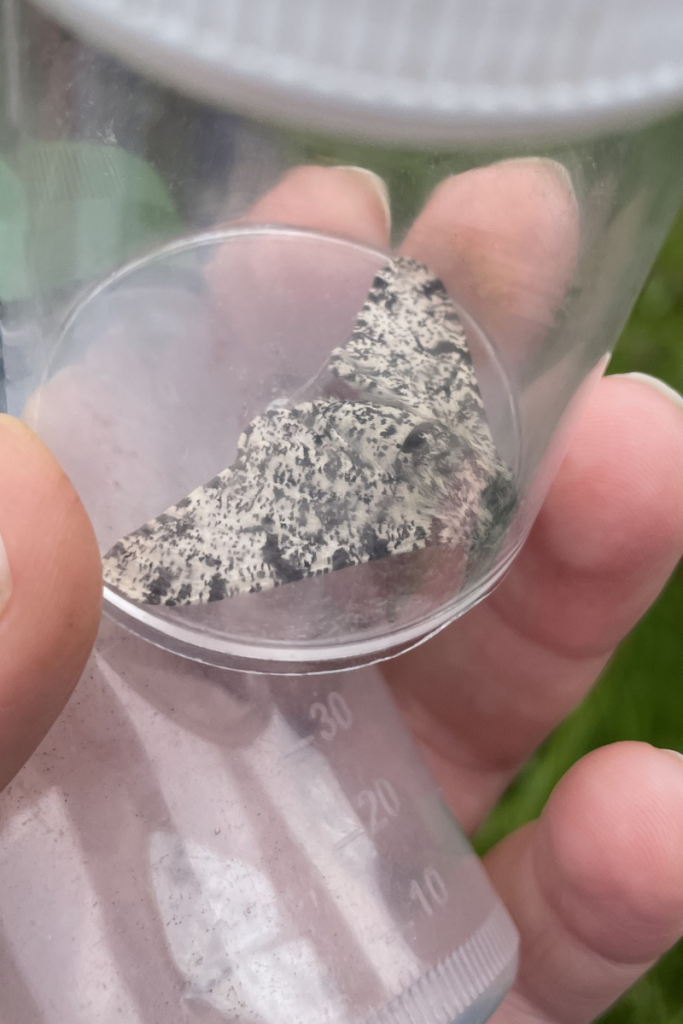
As well as species such as rusty dot pearl, nutmeg, yellow brimstone, grey shoulder-knot, flame shoulder and silver Y (an indicator species for incoming migrations).
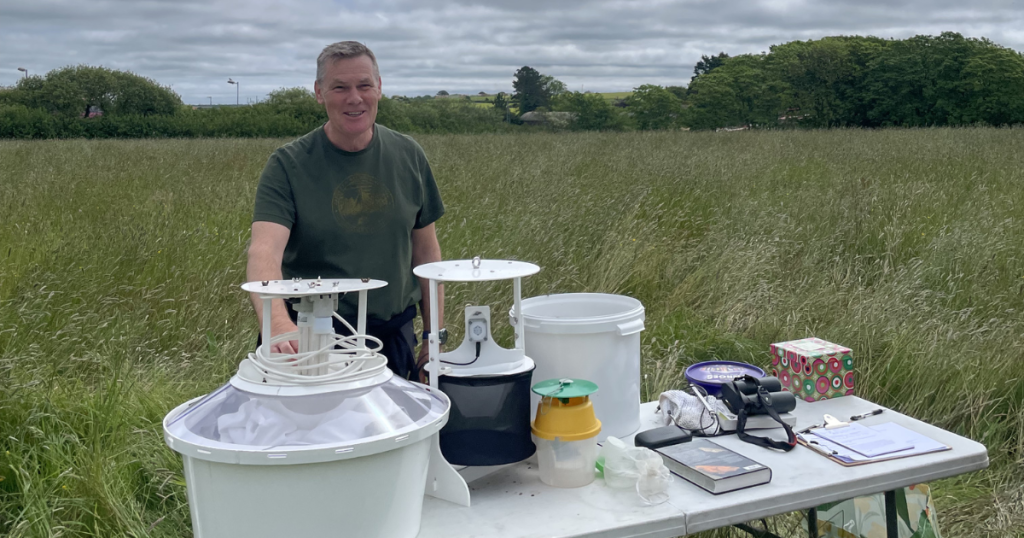
Dougy Wright also demonstrated a wide range of traps, some of which use a lobster pot effect where a UV light attracts the moths to enter the container through the hole in the top and then can’t get out, eventually settling down. He described how you can make rather ingenious £5 moth trap with strips of LED lights, a battery charger and an Asda laundry bag.
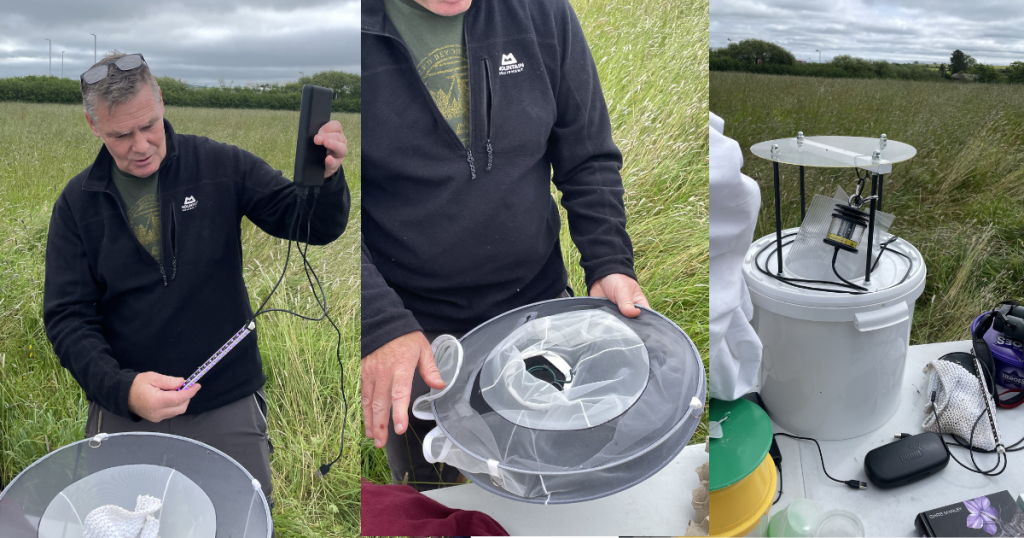
But be warned if you catch the bug, some of the specialist lights can set you back £400 as well as attracting hundreds of moths. And if the hobby really takes hold, you may find yourself needing extra luggage so you can spend your holidays identifying the moths of Portugal, Morocco and Corfu, as Dougy has often done. By the end of the session more than a few people were already adding the simpler moth traps to their Christmas lists.
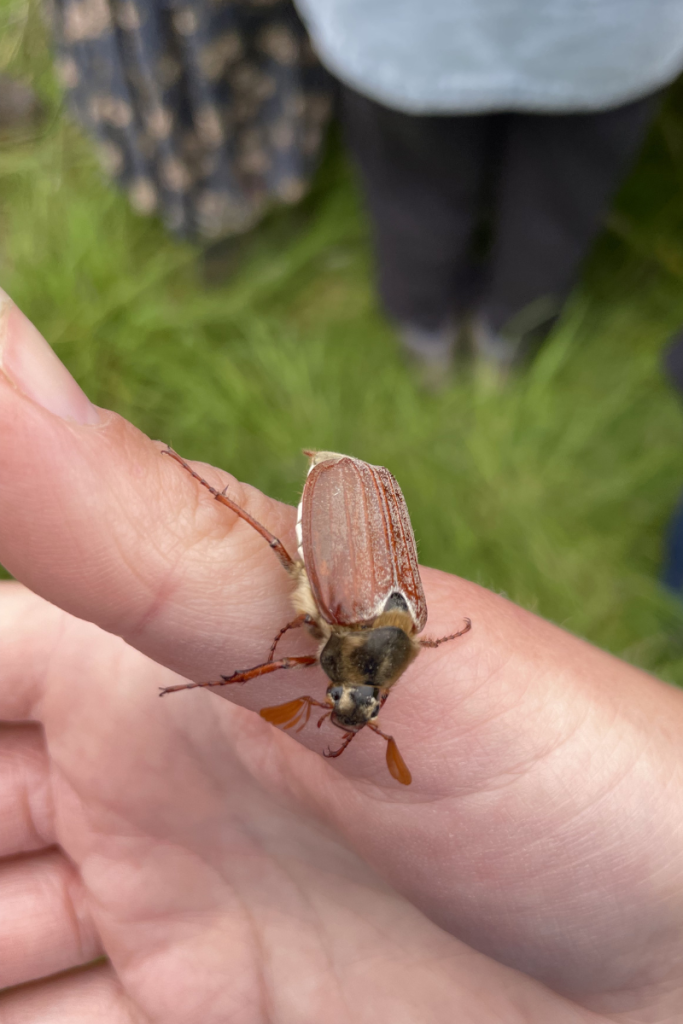
There was a real sense of abundance as Dougy and the group started to let the warmed up moths fly off. With children and adults delighting in having cockchafers (also known as may bugs or doodlebbug) climbing along their fingers, arms and hands.
This awareness of the wealth of wildlife we have in Helston was only further emphasized by Steve Bury’s walk around the fields where he pointed out the hawthorn, blackthorn and sycamore which marks the hedge as over 300 years old. He helped us listen to the song of chaffinch, song thrush, goldfinch, wren and chiff chaff. He also quizzed the children on the collective nouns for birds, which they were stunningly good at –although no one guessed ‘an orchestra of avocets’. As we approached the back field nicknamed by some “the haven” we saw a roe deer prancing to and through, who Steve suspected might have a fawn, so we retreated and left them in peace to enjoy this oasis of wilderness.
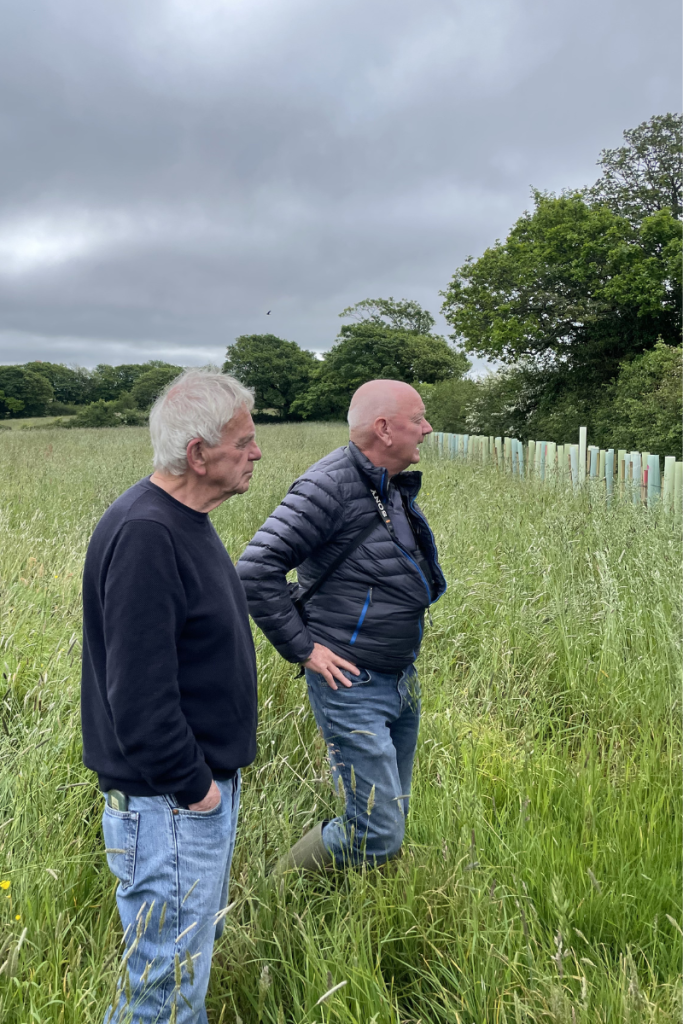
As Dougy Wright and Steve Bury set off from Tri Gwel on their quests to find a vagrant emperor dragonfly and a bee-eater blown to the Lizard on the Saharan winds, they left us with some suggestions to get started on our own spotting journey.
Apps:
- ObsIdentify (Apple & Android)
- What’s Flying Tonight
- Merlin
- Collins Bird Guide (£14.99)
Groups for forecasts and spotting advice:
Plants that will attract African migrant moths:
- Nicotiana
- Evening primrose
- Jasmine
- Buddleia.